facebook
Online chat
Chatbot

“Localization Is Not Only About Delegating Authority, but Above All About Delegating Trust”: How the Legal Development Network Coordinates the WASH Cluster in Mykolaiv Oblast

Publication date: December 3, 2025

Author: Valentyna Chabanova-Babak, Content Manager, Link platform

Since August 2025, the Legal Development Network has become the coordinator of the WASH (Water, Sanitation and Hygiene) Cluster in Mykolaiv Oblast. We spoke with Victor Alkhimov, Program Manager at the Legal Development Network, about what this means for the Link platform and for humanitarian assistance to the de-occupied communities of the region.
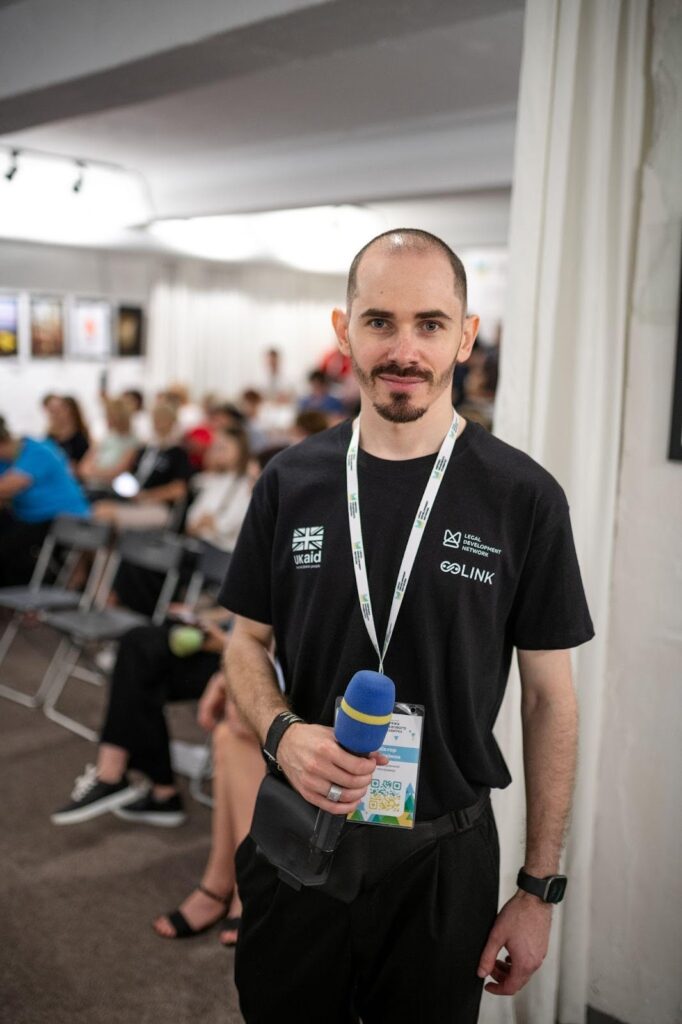
Victor Alkhimov, Program Manager, Legal Development Network

  • The humanitarian cluster coordination system is activated when a national government is unable to independently manage humanitarian challenges caused by war or natural disasters. Overall coordination is provided by the UN Office for the Coordination of Humanitarian Affairs (OCHA), while individual clusters are usually led by various UN agencies. How did the Legal Development Network become the coordinator of the WASH Cluster in Mykolaiv Oblast?
  • The UN-coordinated cluster system is activated at the early stage of a complex humanitarian situation — in our case, caused by the war—to support the government. When the situation begins to stabilize, the system must transition: the government and local civil society organizations should gradually take over, establishing their own mechanisms of coordination and engagement with affected populations. This process is known as localization of humanitarian response. Within this framework, the Legal Development Network became the coordinator of the WASH Cluster in Mykolaiv Oblast.
  • How does localization work in practice?
    The first phase is becoming a partner of the cluster. The second is a joint transitional period where we work side by side. Eventually, the cluster, as a formal coordination mechanism, will be deactivated. But localization is not only about transferring authority — it is primarily about transferring trust, responsibility, and data to those who understand the situation on the ground best. This philosophy is at the core of our work.
  • Are we currently in the second phase?
  • Yes. We are now working jointly with the cluster and mutually strengthening each other. Participation in the cluster enables the Legal Development Network to advocate more effectively for the urgent needs of residents in the de-occupied communities of Mykolaiv Oblast, within the WASH Cluster’s scope. And we can advocate not only at the oblast level but also nationally. We can now raise issues more visibly, giving previously overlooked needs a greater chance to be recognized and addressed.
  • How does the Legal Development Network strengthen the cluster?
  • We have essentially become the cluster’s “field extension.”
    Through the work of the Link platform, which the Legal Development Network has been implementing for three consecutive years in cooperation with the Czech humanitarian organization People in Need and with funding from the UK Government, we help the cluster see the real, dynamic picture of needs in communities—we understand what is happening on the ground. Link has more than 900 informants in the de-occupied communities of Mykolaiv and Kherson oblasts and updates needs data every two weeks.
  • Could you share specific examples of mutual reinforcement between the cluster and the Legal Development Network?
  • First, I want to highlight the case of verifying the number of vulnerable population groups in Mykolaiv and Kherson oblasts. As part of one of our projects, we requested data from the Ministry of Social Policy on the number of people belonging to vulnerable groups. We received the official figures. But when we compared the Ministry’s data for the same communities with the data collected by our field specialists, we found the Ministry’s numbers to be three times higher.

After discussing this with our partners, we concluded that the Ministry’s statistics include people registered as internally displaced persons (IDPs) in a community but who no longer reside there. In contrast, the data collected by our specialists reflects the actual number of people currently living in a specific community.

Why is this important? Humanitarian funding is shrinking. This year, with the closure of the United States Agency for International Development (USAID), funding decreased by 44%. This significantly reduces the capacity of humanitarian organizations to provide assistance. Therefore, we must verify the most vulnerable people more precisely and direct support to them.

  • Do you collaborate with government bodies to share up-to-date information?
  • Yes. We have signed a memorandum of cooperation with the Regional Development Agency of the Kherson Oblast Military Administration. We are currently in talks with the Mykolaiv Regional Development Agency. We seek cooperation and data exchange. Government authorities continue collecting information at the oblast level, while we collect it at the community level. This allows us to compare official and factual indicators, understand trends, and better plan future actions.

Let me share an interesting case from Kherson Oblast:
Our analysis showed that every month, 100–200 people arrive in or leave de-occupied communities. But this month, there was an increase of 500 people. Why? We discussed it with the Kherson Regional Development Agency and found that this was due to the launch of a government program compensating households for solid fuel. People began receiving 19,500 UAH for winter heating needs. As a result, some people returned to the oblast to collect the assistance and stayed, while others came, received the payment, and left again.

  • Let’s return to WASH Cluster work. Tell us about the “WASH in Schools” technical working group. What is its purpose, and what has been achieved?
  • Under “WASH in Schools,” we worked together with the Education Cluster. Different clusters periodically collaborate to coordinate joint areas of work. A donor approached us with funding available for restoring school sanitation facilities and installing reverse-osmosis systems. They needed to know how many educational institutions had such needs.

The Education Cluster submitted an official request to the Mykolaiv Oblast Department of Education. The Department responded with lists containing more than 500 educational institutions. Together with Education Cluster representatives, we agreed that Link could help verify these needs.

Within two weeks, our local team contacted community informants, identified school principals, and gathered detailed information. We then developed a prioritization methodology. As a result, we compiled a list of 25 educational institutions that urgently require repairs of sanitation facilities and 66 schools prioritized for the installation of reverse-osmosis systems.

This material was prepared by the Legal Development Network in cooperation with the Czech humanitarian organization People in Need and with financial support from the UK Government.

Отримайте поглиблену консультацію через чатбот LawLink


P. S. In June 2024, the Legal Development Network (LDN) launched a crowdfunding campaign, Recovery of The South of Ukraine , as part of the crisis response program #StandWithUkraine.


You can


Recovery of The South of Ukraine

If you have notices an error on the web-site, please, highlight the text and press ctrl-enter.

Коментарі

Have you found your solution? Help others!

Share on social media

Print a poster

Print and place the Network's poster on a notice board in your entrance hall

Become a volunteer

Become a volunteer and assist others in finding problem solutions

Do you need a consultation ?

Online chat

Ask question and one of the LDN's lawyers
will answer it.
Chat's schedule: from 10 to 16
every day

Chatbot

Ask questions via LawLink Bot in any convenient way. LawLink Bot is a smart and digital legal assistant created by the Legal Development Network.

connect

Our initiatives

The Legal Development Network implements comprehensive projects aimed at strengthening human rights, developing capable communities, and building sustainable tools for access to legal aid. We work at the intersection of advocacy, legal education, and local coordination of humanitarian response.

support

Support

Inform on error

×