Share on social media
Share
Tweet
Publication date: January 29, 2026
Author: Yuliia Bilyk, Communications Manager, Legal Development Network
Between 2023 and 2025, three communities in southern Ukraine went from researching their needs, challenges, and potential to gradually implementing their strategic plans, developed in cooperation with the Legal Development Network in partnership with the Czech Humanitarian Organization People in Need and with funding from the UK government. In particular, in 2025, the Mishkovo-Pogorilivska and Shevchenkivska communities in the Mykolaiv oblast and the Bilozerska community in the Kherson oblast assessed the effectiveness of their own strategies, developed action plans, and familiarized themselves with the best practices of communities in the Cherkasy oblast in the field of municipal services. Read on to find out what the communities achieved in the end.
Strategic planning in crisis times
As a result of three years of cooperation, each of the communities participating in the project received three strategic and program documents (nine documents in total). The first of these is a community development strategy with a perspective until 2030.
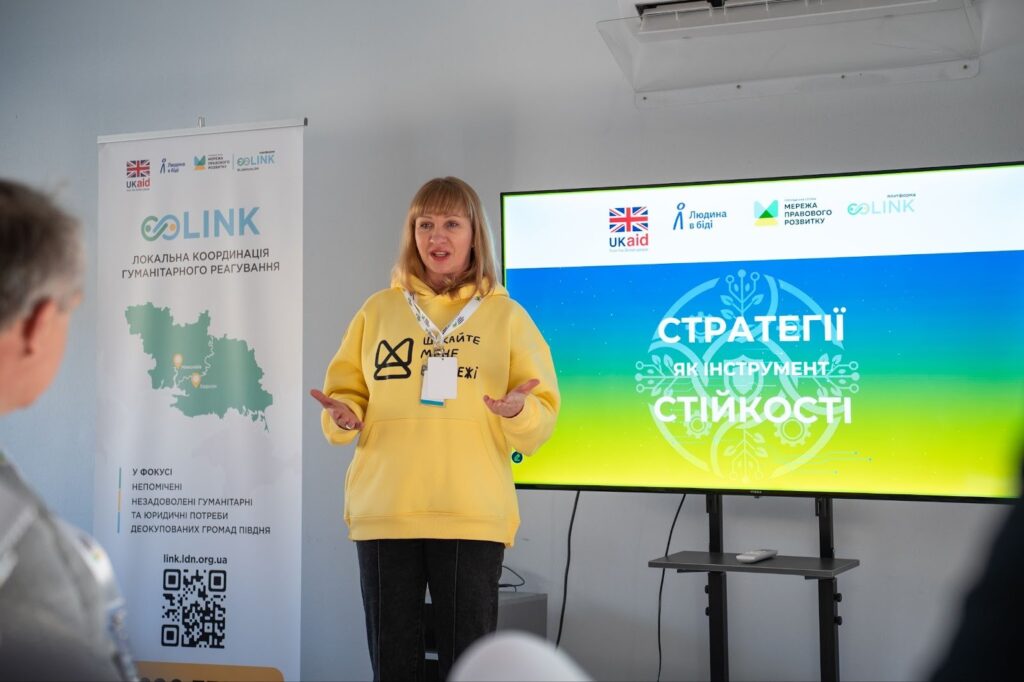
“Over the past three years, communities have come a long way and faced many challenges. Before embarking on strategy development, they conducted a detailed analysis of their security, economic, and social contexts. The strategies developed are not only designed for recovery as a comprehensive process. They also integrate mechanisms for responding to emergencies and risks of political and economic deterioration,” notes Olga Nastina, Executive Director of the Legal Development Network.
In the process of developing strategies, communities faced a number of obstacles, such as low stakeholder engagement, a shortage of qualified personnel, and a limited number of stable local partners. Another obstacle was the dynamic context, where rapid changes in the security and socio-economic situation directly affected the relevance and content of strategic decisions. A telling example is the Bilozerska community, which borders both the communities of the Kherson oblast, where the line of contact is located, and the communities of the Mykolaiv oblast. This location creates additional risks and requires flexibility in strategic planning.
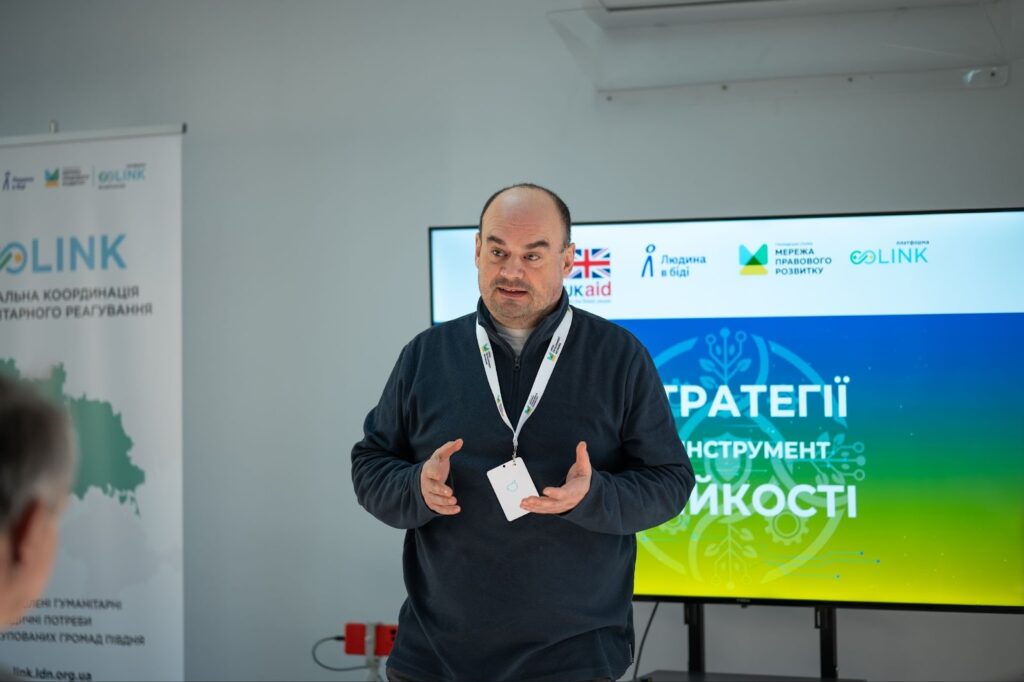
“When developing the first strategy, we tried to take into account the needs of the entire community. By the end of 2024, we already had a complete document. However, given the location of our community and the approaching front line, we and the Legal Development Network had to make adjustments in real time. Then we updated the strategy with a medium-term perspective until 2028. The imbalance in community development is caused by the fact that we cannot clearly plan, for example, the future reconstruction of medical facilities. After all, we do not understand the needs, the quantity, or the format of the reconstruction — whether it will be construction or major repairs,” says Oleksiy Zhuravlenko, deputy head of the Bilozerska settlement military administration.
In the process of updating community development strategies, the requirements of strategic environmental assessment (SEA) were also taken into account as an integral part of strategic planning. This allows environmental considerations, potential risks, and constraints to be integrated directly into the logic of strategic decision-making and improves the quality and sustainability of management decisions.
Effective decisions and partnerships
The next logical step in implementing community development strategies was to develop action plans for their implementation for 2026–2027. As of January 2025, action plans have been finalized in all communities participating in the project. As part of expert support, technical tasks have been created for the project initiatives envisaged in the strategies. As an applied tool for the transition from strategic decisions to practical implementation, technical tasks are useful, in particular, for structured project planning, budget formation, and preparation of funding applications.
“The developed strategic documents form a unified system of management decisions that communities can rely on in both strategic and day-to-day management. In particular, project cards included in action plans can be used as practical templates for preparing grant applications and attracting external resources,” notes Svitlana Seldina, an expert in strategic planning and management.
Community leaders consider resource mobilization to be the second most important issue after security. Target communities focus both on their own revenues and opportunities to increase them, as well as on funds from external sources.
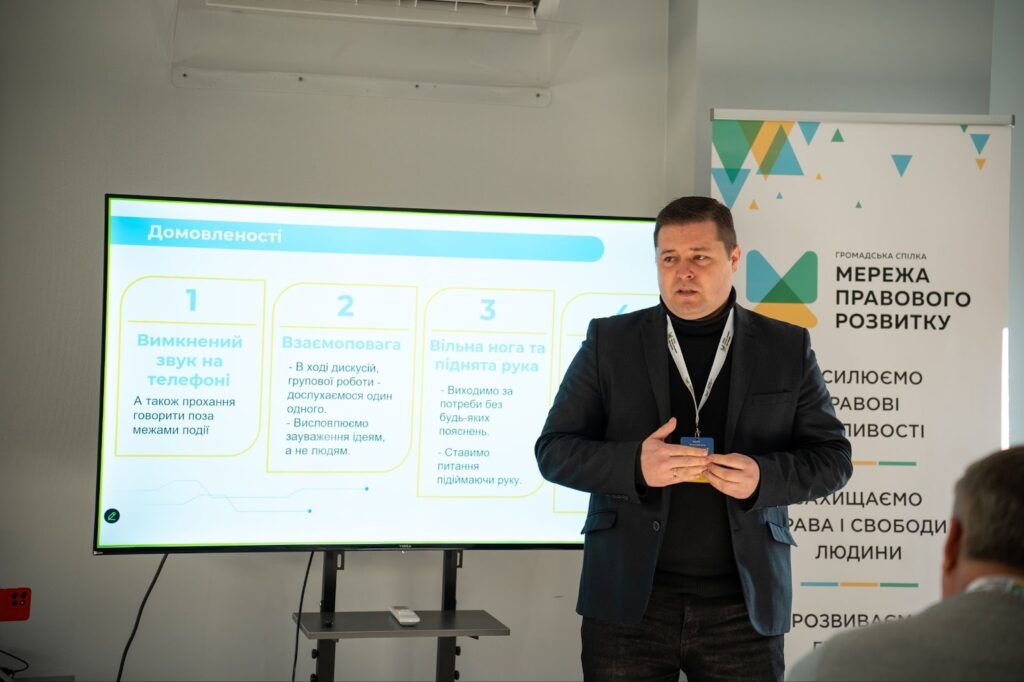
“We are fighting for our communities’ own revenues: trying to preserve the employment of local individual entrepreneurs, supporting farmers and other business sectors, including helping them participate in grant programs. After all, the more active the stakeholders are, the easier it will be for local authorities to implement strategic plans,” emphasizes head of the Shevchenkivska community Oleg Pylypenko.
According to the results of 2025, public organizations in the Shevchenkivska community attracted almost UAH 20 million for infrastructure projects in the community. Given this tremendous success, the community will strive to scale it up in the coming years. This involves creating a coalition of local organizations in the community and subsequently adopting a local program that would provide mechanisms for public participation in co-financing the community’s needs.
Expert support for communities
Starting from the strategy implementation stage, communities moved on to regular monitoring of their implementation. This allows them to compare plans with actual progress and, if ineffective decisions are identified, to adjust their actions in a timely manner. As an applied management tool, monitoring reports record the status of implementation, explain the reasons for deviations, form a list of recommendations, and serve as a basis for updating strategic documents and action plans. It is thanks to monitoring that the strategy for communities remains a living management tool rather than a formal declaration.
Starting in 2025, based on the results of monitoring and at the request of communities, the Legal Development Network will provide expert support in preparing decisions on priority areas identified as critical or insufficiently addressed during the implementation of strategies. In particular, in the Shevchenkivska community, experts are accompanying the security audit process.
In addition, work has begun in the Mishkovo-Pogorilivska community to create a program for developing the human resources capacity of the local government. For this community, as for the other two project participants, the issue of human resources sustainability has become particularly relevant in the context of ongoing changes and increasing administrative burdens. The future program aims to systematize approaches to attracting, retaining, and developing specialists, create conditions for continuous professional growth of staff, and ensure institutional memory and continuity of management processes.
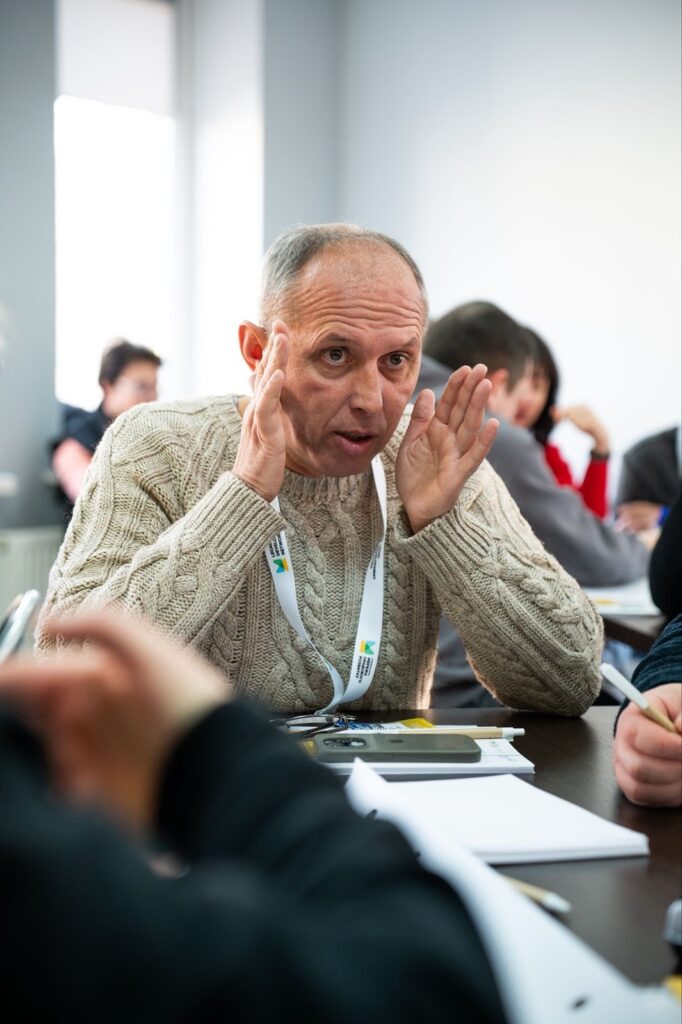
“Today, we see the need to conduct an audit of the personnel reserve, because events are changing dynamically, new positions are being introduced, and new priority areas are emerging. And we would very much like to have a clear strategy for our peaceful work at the end of our cooperation with the Legal Development Network,” says Andriy Botanin, head of the Mishkovo-Pogorilivska community.
Strengthening human resource capacity
Strategic planning in communities is handled by working groups consisting of managers and employees of local government departments, local institutions, and law enforcement agencies. These people were involved in developing development strategies, creating action plans, and monitoring reports in the format of facilitated sessions and online workshops. In addition, within the framework of the project, working group participants had the opportunity to develop their professional skills during training sessions and study visits to other Ukrainian communities.
In 2024, representatives of the project’s target communities learned about the practices of organizing and providing administrative services in communities in the Dnipropetrovsk oblast, and in October 2025, they visited five communities in the Cherkasy oblast. This time, they studied practical solutions in the field of municipal service organization, management process optimization, and service quality improvement. The study visits were aimed not only at exchanging experience, but also at forming inter-municipal partnerships, developing horizontal links between communities, and adapting partnership practices to their own management.
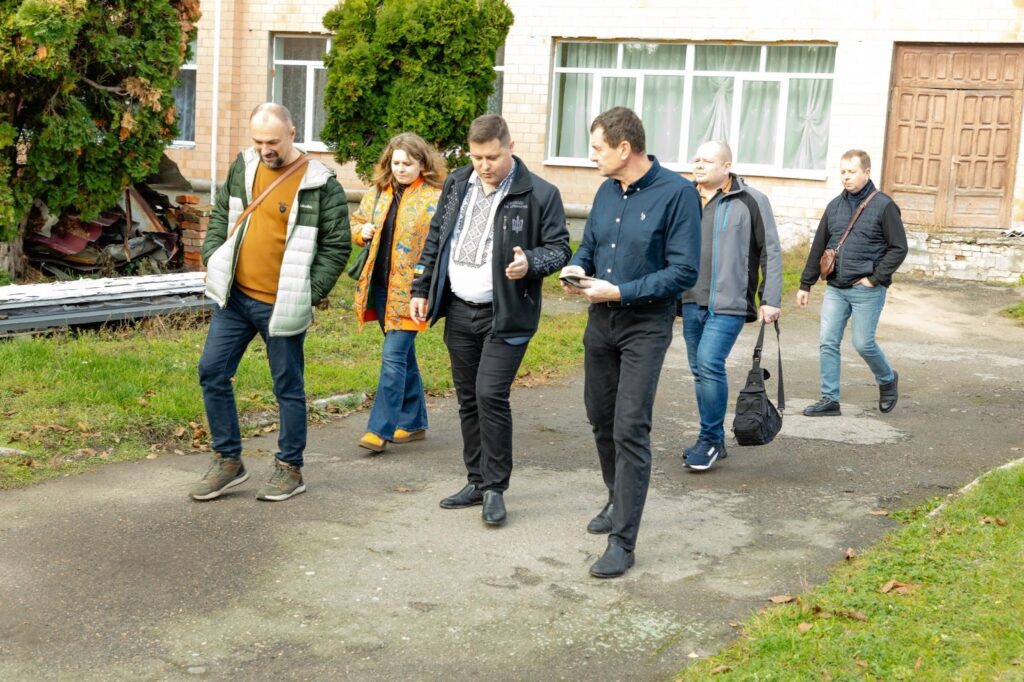
“Our visit was aimed at studying effective local solutions that can be adapted for the development of our own community. After all, the achievements of others make it possible to accelerate the implementation of changes, taking into account all risks, and to build better services for people. We drew valuable tools and solutions from each community that could be useful for application in our community,” shares head of the Shevchenkivska community in the Mykolaiv oblast Oleh Pylypenko.
During a visit to the Shevchenkivska community in Cherkasy oblast, where Taras Shevchenko was born and raised, the two Shevchenkivska communities signed a memorandum of cooperation. As an embodiment of the joint actions envisaged in the document, the Shevchenkivska community in Mykolaiv Oblast intends to bring schoolchildren to the partner community in Cherkasy Oblast in the spring of 2026, not only for an excursion, but also to plant oak seedlings from Shevchenko’s homeland in their villages.
The topics of all study visits and various events were determined according to the needs of the communities. Among the topics of the trainings that took place in 2025 were — establishing partnerships between local authorities, civil society organizations, and businesses; the specifics of communicating with war-affected populations and applying the principles of nonviolent communication; communication and interaction with veterans and their families; developing team management skills; and monitoring and evaluating the implementation of development strategies.
Lessons learned
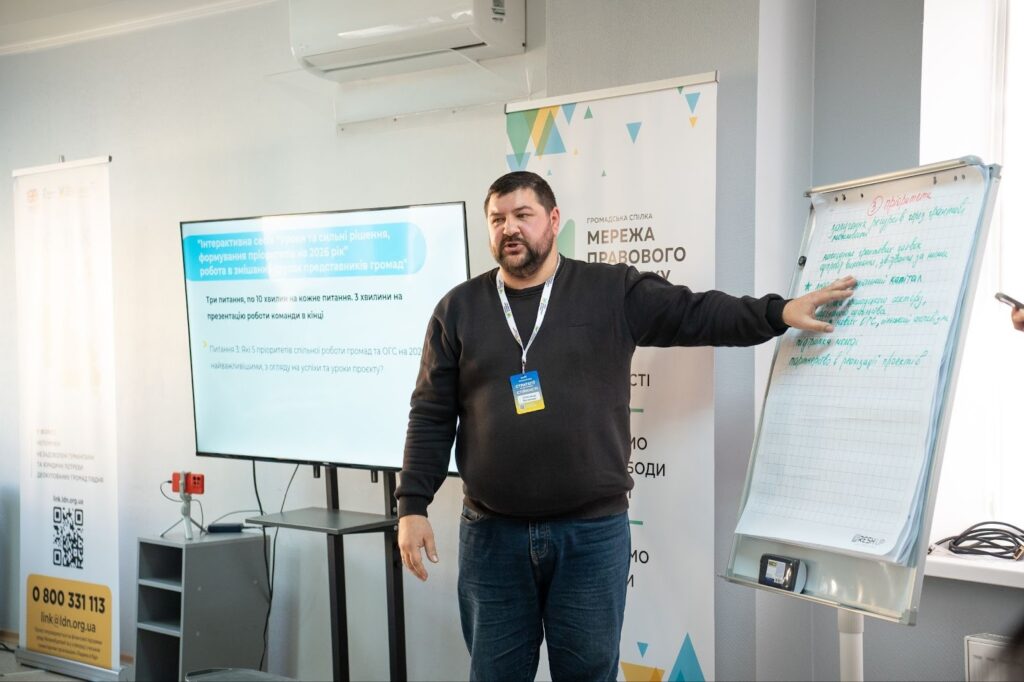
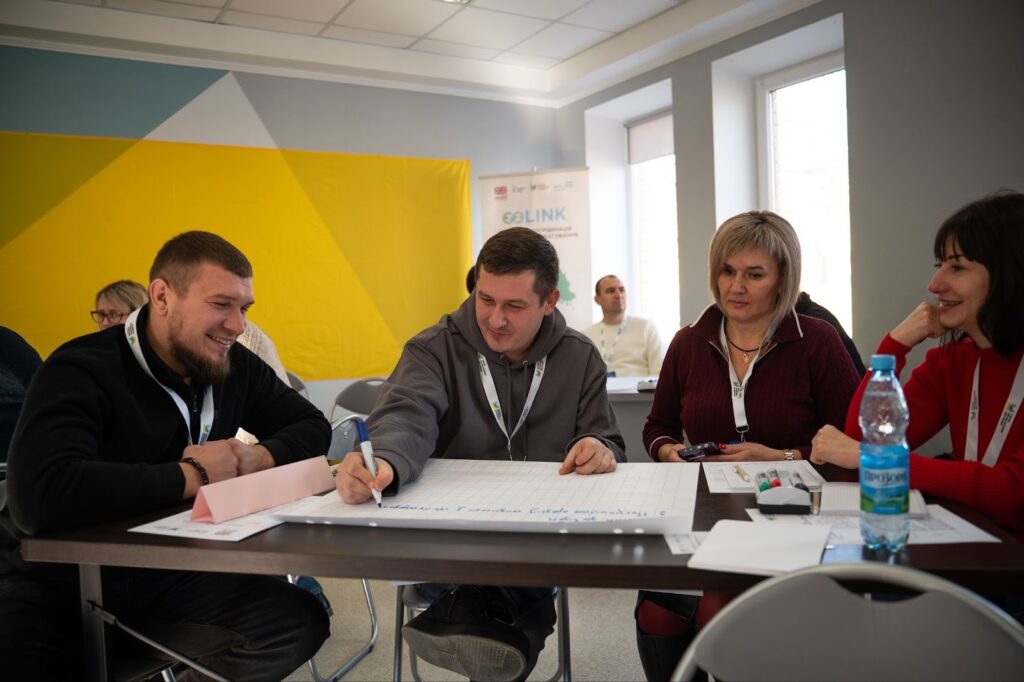
On January 20, 2026, in Mykolaiv, target communities involved in the project, experts, representatives of local self-government bodies, executive authorities, partners, and the Legal Development Network team gathered for a final dialogue event. This meeting provided a space to discuss all the results, assess progress, and outline goals for the future.
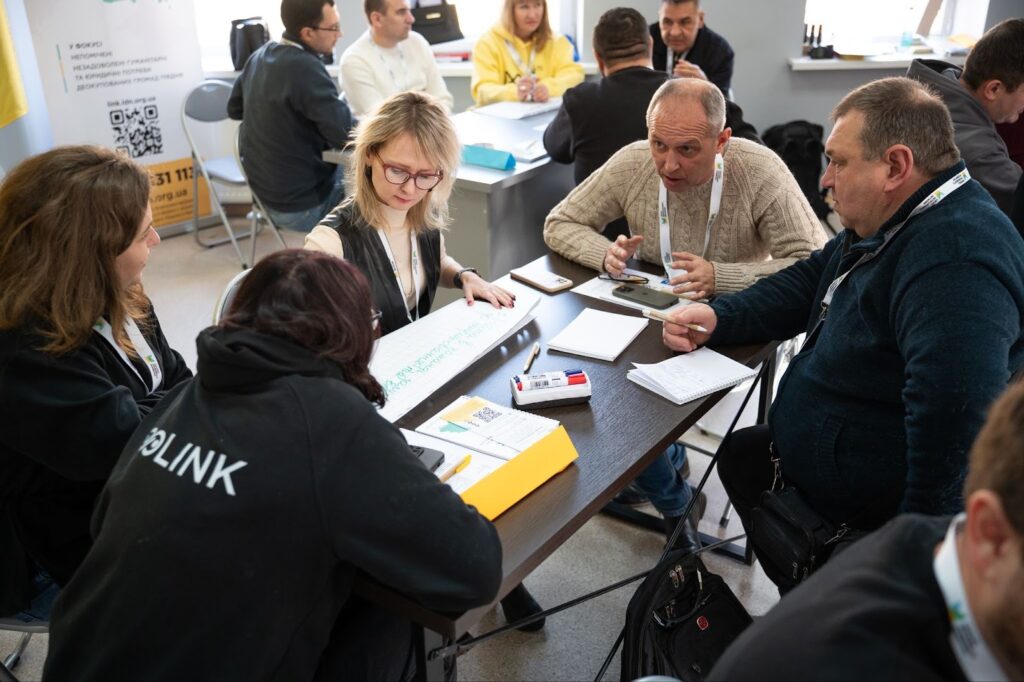
Working in small groups, participants identified a list of key lessons learned from three years of work. Among them, the following were mentioned most often.
“At the initial stage of developing the strategy, it was a big challenge for us to involve stakeholders in the process. The work was divided into five categories, and at some stages, there were only a few representatives from a particular sector. For example, there were three people from the business sector — entrepreneurs who remained in the community. Today, they are no longer there: their businesses have been destroyed, their property has been destroyed, and they have left the community,” says Deputy Head of the Bilozerska Settlement Council for Executive Bodies Oleksandr Vasylenko.
“Although many people have left the community over the three years we have been developing our strategy, we are developing and keeping pace with current needs. We are supported by community and charitable organizations, and we have created a veterans’ space in one of the most remote settlements. The community has proactive young people and supports the efforts of the authorities in implementing projects. We listen to people’s opinions and work closely together because people are our most valuable resource,” the official emphasizes.
When analyzing the strategy development process, community leaders note several findings. First, the priorities identified by working groups sometimes did not correspond to the reality that emerged during strategy implementation. Second, residents’ perceptions of their community may not correspond to reality. A striking example is the situation in the Shevchenkivska community, where residents opposed the creation of a plant for processing demolition materials.
“We had preliminary agreements with a group of companies with Belgian and French capital to establish a plant in the community located between two regional centers—Mykolaiv and Kherson—that would process debris into new materials. A 3D video with a detailed visualization of this project was also prepared. It was clear that the partners were serious and in it for the long haul. This is a much-needed initiative, as there is a lot of destruction in both Mykolaiv and Kherson oblasts, and a large amount of building materials will be needed for reconstruction. However, the public did not support the decision to change the intended use of the land for the construction of the plant, even though the plant had committed to repairing all the roads in the community,” says Oleh Pylypenko, head of the Shevchenkivska community in the Mykolaiv oblast.
Another interesting fact is that, according to the results of an in-depth sociological study conducted by experts from the Legal Development Network in the Shevchenkivska community, most of its residents consider agriculture to be the main source of revenue for the budget. In reality, 70% of the community’s budget comes from local industrial enterprises. In particular, Ukraine’s largest producer of tomato paste operates in the community.
“Of course, people’s opinions are important, but they are not always strategic. Therefore, our task as local government bodies is to communicate more with people, provide them with verified facts, and ensure that everyone is on the same page,” emphasizes Oleh Pylypenko.
There are many strategic directions that communities have set for themselves. It is impossible to cover them all at once. It is always necessary to choose which tasks to perform today, which can be postponed until tomorrow, and which can wait until a more favorable moment. Moreover, the selection of priorities must be done in a balanced manner and with the participation of the public so that the decisions made are understandable.
One of the priority areas in communities is veteran policy. The present requires effective decisions to support defenders and their families. For example, in the Mishkovo-Pogorilivska community, 192 residents are military personnel and 15 are veterans. Some veterans report their desire to return to service because they do not see themselves in civilian life.
“A veteran who returns to his community and who was successfully engaged in business before serving will not agree to work, say, as a veteran’s assistant with a salary of 20,000 hryvnia. We are studying such problems through our public organization ”Veteran Space,” which was created by military personnel released from captivity and their wives. By studying the needs of veterans and their loved ones, we are trying to earn the trust of defenders so that when they return home, they feel needed and protected,” emphasizes head of the Mishkovo-Pogorilivska community Andriy Botanin.
What’s next
The target communities of the project are different, but they are planning for the future with a common vision. In 2026, the Bilozerska, Mishkovo-Pogorilivska, and Shevchenkivska communities plan to continue working to maintain security, attract financial resources, and develop intermunicipal and international cooperation. In previous years, they have laid a good foundation for the gradual achievement of their goals.
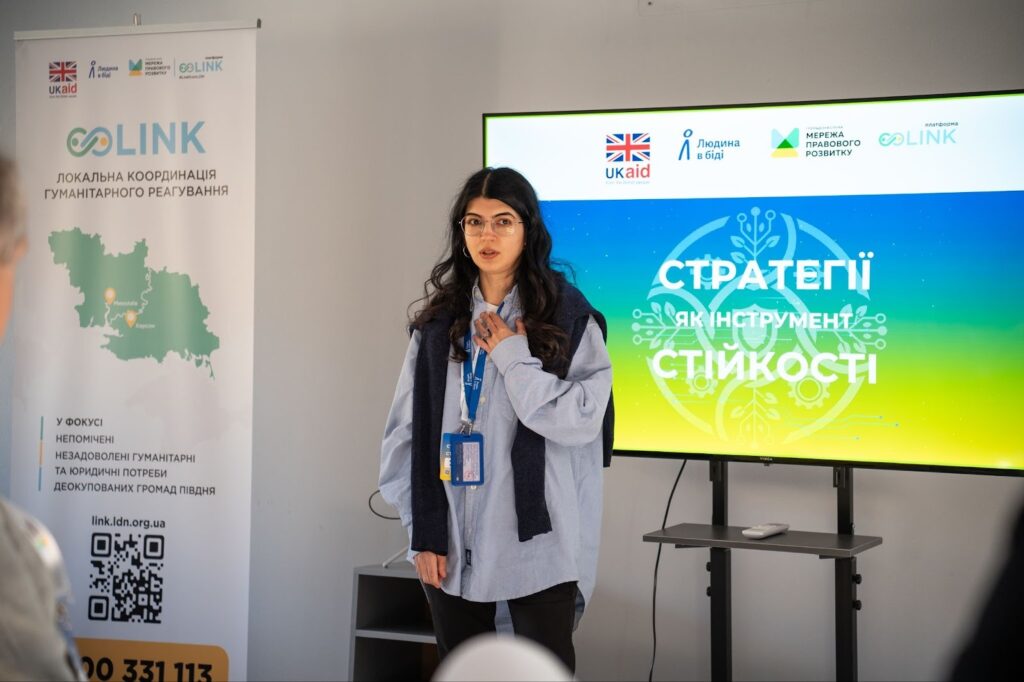
“This project, whose fourth stage is just around the corner, demonstrates how important long-term projects are. At the beginning, we could look at the situation from one angle, but now we are adapting to the conditions that, unfortunately, exist and, despite everything, are implementing strategic visions in our development projects. As a humanitarian organization, People in Need greatly values partnerships with national civil society organizations such as the Legal Development Network, which has the strength, inspiration, and expertise to work on strategic visions in communities. This is an extremely important argument for building on it, which we will be able to see not only in the context of full-scale war, but also after the war ends,” emphasizes Coordinator for Sustainability and Recovery at the Czech Humanitarian Organization People in Need Katerina Matsienko.
The experience of strategic planning in three communities was not easy. However, the lessons learned allow us to avoid past mistakes in the future and may also be useful to other communities that are just beginning to think about strategic recovery.
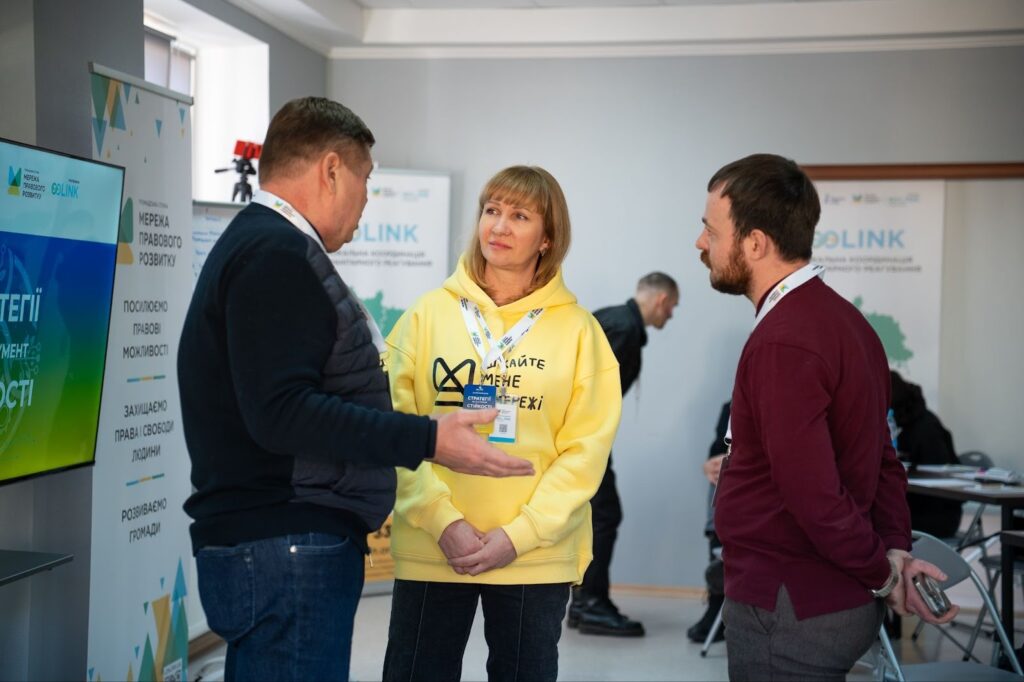
“We know how hard our project communities worked and how difficult it was to find the time and resources to develop new approaches to development in conditions of constant danger. The work that has been done is our joint achievement. And we are proud that today there is a request from neighboring communities in the Mykolaiv and Kherson oblasts, where we worked, and neighboring oblasts to spread the best practices and influence of our project,” says Executive Director of the Legal Development Network Olga Nastina.
Having achieved tangible changes during their participation in the project, the communities realized that nothing is impossible if you work tirelessly and have reliable support. The Legal Development Network and its partners continue to provide such support. The recovery is just beginning.
P. S. In June 2024, the Legal Development Network (LDN) launched a crowdfunding campaign, Recovery of The South of Ukraine , as part of the crisis response program #StandWithUkraine.
You can Recovery of The South of Ukraine |
If you have notices an error on the web-site, please, highlight the text and press ctrl-enter.
Print and place the Network's poster on a notice board in your entrance hall
Become a volunteer and assist others in finding problem solutions
Ask question and one of the LDN's lawyers
will answer it.
Chat's schedule: from 10 to 16
every day
Ask questions via LawLink Bot in any convenient way. LawLink Bot is a smart and digital legal assistant created by the Legal Development Network.

The Legal Development Network implements comprehensive projects aimed at strengthening human rights, developing capable communities, and building sustainable tools for access to legal aid. We work at the intersection of advocacy, legal education, and local coordination of humanitarian response.

We make legal aid accessible. We empower communities and help them develop. Support us in this work.