Share on social media
Share
Tweet
Publication date: March 24, 2026
Changes in qualification requirements for specialists in accompanying veterans, ensuring payment of state allowances to them. Creation of a coordination platform for organizations working with veterans in the Mykolaiv oblast. All these are the results of the advocacy campaign implemented by the Legal Development Network in partnership with the humanitarian organization «People in Need» and with the financial support of the Czech Development Agency within the framework of the «Vidnova» project. We will tell you exactly how it was possible to achieve this.
The voices of escort specialists and veterans influence state decisions
Within the framework of the «Vidnova» project, the team of the Legal Development Network (LDN — further) worked with the communities of the Mykolaiv oblast to strengthen the support system for veterans and their families. One of the key areas — is the advocacy of practical solutions for veterans’ support specialists and the creation of sustainable coordination mechanisms between the public sector, communities and humanitarian organizations.
While working in communities, the team of the Legal Development Network collected and systematized real requests from «fields» — from the specialists themselves to accompany veterans, veterans and their families, as well as from representatives of social departments.
First stage — meeting with veterans escort specialists, veterans and their families, representatives of community social departments and involved experts. Among the participants were representatives of the Commissioner for Human Rights of the Verkhovna Rada of Ukraine, the Coordination Headquarters for the Treatment of Prisoners of War and Missing Persons, the public sector (including military psychologists), the international organization Mission East, as well as representatives of the military administration who take care of veteran policy. As a result of the discussion, the team recorded 31 specific issues — from access to services, psychological support and medicine to problems with benefits, housing and communication between systems.
The second stage — expanded meeting with the involvement of the Ministry of Veterans Affairs of Ukraine, representatives of local self-government bodies at the regional level and specialized structures. During this conversation, the position of «fields» was conveyed as clearly as possible: problems and consequences for people who work with veterans and their families every day.
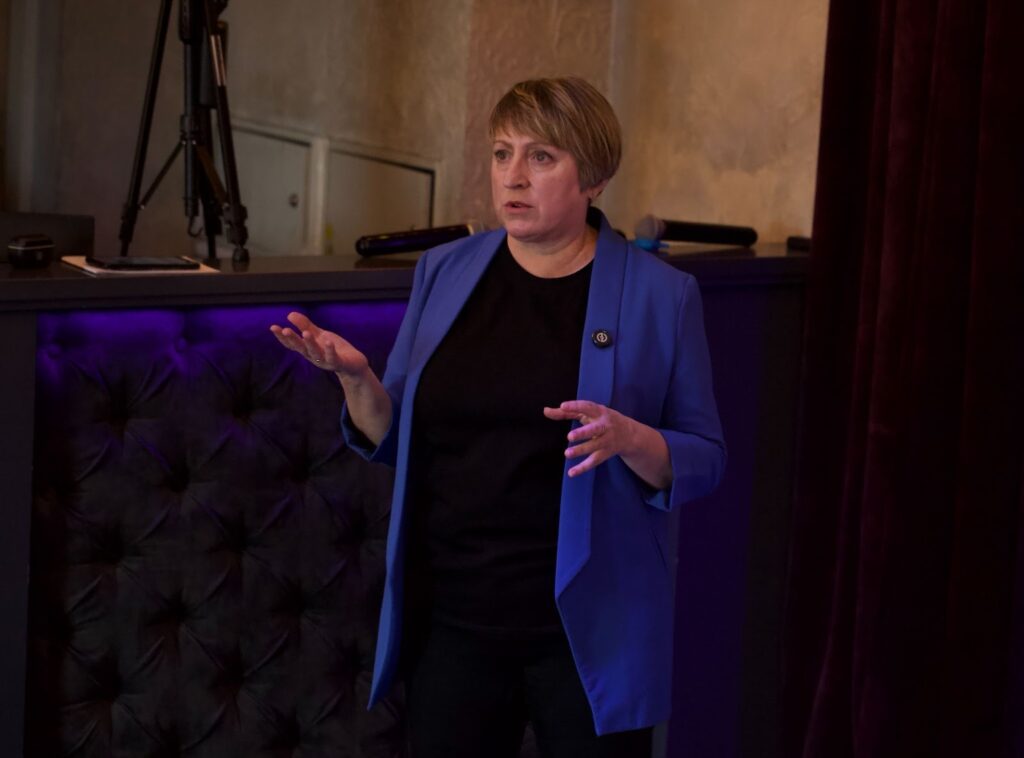
«Everything we have worked out both in the direction of veteran policy and in the direction of protecting the rights of IDPs — is due to the fact that the Network communicates at all levels: local, regional and national. Thanks to the established communication with the Ministry of Veterans Affairs, we directly convey the initiatives that the Ministry takes into account in changes — at the level of orders, resolutions and legislative documents. In total, they had four meetings with them within the framework of advocacy activities», the Legal Development Network’s involved advocacy expert Lyudmila Yaremchuk notes.
One of the most tangible results of such advocacy has been changes to the qualification requirements for professionals accompanying veterans and demobilized persons. The problem was voiced by communities.
«When we talk about big cities — there are more specialists. But when we take a small community, it is almost impossible to find a person who meets extremely high requirements. And as a result, veterans cannot get services not because they are not needed, but because there is no one to provide them», Lyudmila Yaremchuk shares.
The conversations raised issues of justice and trust: why veterans with combat experience, but without the «required» diploma, cannot hold office, while formal criteria allow other candidates to do so.
After joint meetings in Mykolaiv, where the problem was directly voiced by veterans, specialists and service providers, the Ministry took these arguments into account. In the updated requirements, seniority is no longer required, and the list of basic education has been expanded.
«Currently, to take a position as an uncategorized veteran escort specialist, work experience is not required — is enough to have a basic higher education, and not necessarily a legal one. A person starts working, recruits practice, and later can move to the first or second category», Lyudmila Yaremchuk says.
Another painful block — pay. During the joint events, the participants talked about situations when local leaders did not calculate additional payments and bonuses provided for by the state budget for veterans’ escort specialists, or reduced them at their discretion. For specialists, this became a demotivating factor, — they were fired, and the veterans were again left unaccompanied.
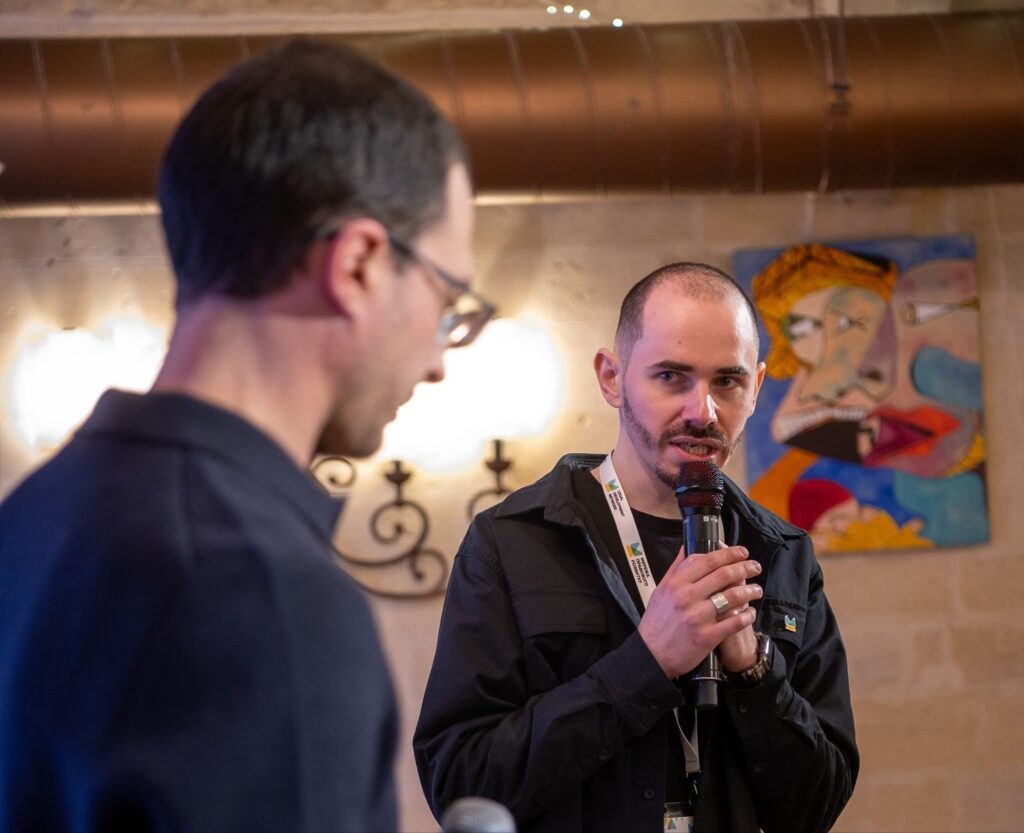
«Specialists announced that their employment policy is unclear: they promised a salary of 20,000 hryvnias, and in fact received 6,000 hryvnias. Social departments said that a veteran escort specialist could not receive more than other employees and cut the payment», the Legal Development Network’s program manager Viktor Alkhimov says.
«We heard a strange argument: “a specialist will not receive a higher salary than a manager”. But you can’t save on this, — the state budget provides funds specifically for support specialists, and there are incentives, because this is work with veterans, where communication is really difficult. After we raised the issue, the Ministry drew attention: everything provided for remuneration must be calculated and paid», Lyudmila Yaremchuk emphasizes.
Legal Development Network experts share, feedback hasn’t been delayed.
«Experts said: after such meetings with the Network, there are no salary problems anymore — they are set all the additional payments that are provided for. And I consider it a huge positive that we achieved», Lyudmila Yaremchuk emphasizes.
A separate area of advocacy — is the safety of the support specialists themselves. When working with veterans, difficult situations occur: mental disorders, addictions, aggressive manifestations, health risks. The network collected proposals from support specialists and turned to the Ministry of Education with the idea of implementing clear protocols and protection mechanisms.
«Our task — is not only to protect the veteran himself, but also to protect the person who works with the veteran. There should be a protocol of actions: what to do in case of aggression or when a person needs medical help (perhaps psychiatric); perhaps the specialist should not go alone, but work together with a medical specialist. It is a matter of life and health», Lyudmila Yaremchuk emphasizes.
«Creating a guide for veterans was an initiative of the MPR, but the OVA showed great interest. They wanted to do something like that, but they didn’t have the resource. Therefore, we proposed to create a joint product — and a directory, and additional materials, in particular, to popularize specialists in accompanying veterans», Viktor Alkhimov says.
However, after a long discussion of this initiative, representatives of organizations and institutions of the region noted that although these data are needed, they will quickly lose their relevance. After all, the legislation on the protection of veterans changes and is supplemented very quickly, and reforms are taking place with it in the services of protection of veterans. So the idea of publishing a printed copy was abandoned. However, the Legal Development Network still participated in updating the information that can be accessed at mkrada.gov.ua.
Involved advocacy expert Lyudmila Yaremchuk analyzed the information on the resource and provided a list of necessary changes that needed to be made in connection with the update of the legislation.
«We submitted absolutely detailed recommendations: what does not comply with current legislation, what is outdated, and what can even create inconvenience for veterans and family members of the victims», Lyudmila Yaremchuk says.
Information booklets and handouts for communities were also developed. They explain basic but critical things: who is a veteran escort specialist, in what cases should he/she be contacted, what the route of receiving help looks like, and where to find contacts.
Together with Nonviolent Peaceforce partners, they returned to the idea with the directory.
«Yes, information in the veteran field is changing very quickly: legislation, approaches, programs, help routes. Therefore, the question is not to print the manual once, but to constantly update it. Our partners have a constant good practice, they update the following materials once every six months: the information is outdated — it was updated, republished and distributed again», the LDN’s program manager Viktor Alkhimov explains.
As a result, instead of one large, but potentially quickly outdated product, a more flexible model was formed: printed materials for communities, partner directories, online resources of urban structures —, and most importantly, a focus on proven, practical information. It is this logic that allows you to maintain quality and not lose the trust of the people for whom all this is done.
Working within the framework of advocacy, the team saw another systemic gap: even when the region has state structures, communal institutions, international and local organizations, — there is often a lack of regular interaction, joint planning and coordinated assistance routes. That is why Mykolaiv emphasized the coordination of specialists who work with veterans and their families.
«We realized that there is not enough communication between them and there is no single coordination center that would solve these issues. Therefore, on the basis of the rehabilitation center for assistance to war veterans in partnership with Nonviolent Peaceforce, we made regular meetings. We gather everyone who works in this direction to create a common strategy and coordinate: who does what and who can help with what», says Viktor Alkhimov.
The meetings have become a venue where international organizations, local initiatives, specialists in accompanying veterans from different communities and specialized communal institutions have come together and are held every two months. To maintain constant communication, a coordination chat of participants was created, where requests are collected, relevant information is disseminated, and contacts are promptly exchanged. It has 53 participants from various organizations who work with veterans and their families in the Mykolaiv region.
A particular example of the effectiveness of coordination was the situation where the platform created literally connected a public utility and an international partner.
«Nonviolent Peaceforce met the head of the veterans center at our meeting. The next day, they visited the center to familiarize themselves with its work, and after some time offered financial assistance. In fact, we have become a bridge between the communal institution and the international organization — and this is a real support for the rehabilitation of veterans», shares Viktor Alkhimov.
If you have notices an error on the web-site, please, highlight the text and press ctrl-enter.
Print and place the Network's poster on a notice board in your entrance hall
Become a volunteer and assist others in finding problem solutions
Ask question and one of the LDN's lawyers
will answer it.
Chat's schedule: from 10 to 16
every day
Ask questions via LawLink Bot in any convenient way. LawLink Bot is a smart and digital legal assistant created by the Legal Development Network.

The Legal Development Network implements comprehensive projects aimed at strengthening human rights, developing capable communities, and building sustainable tools for access to legal aid. We work at the intersection of advocacy, legal education, and local coordination of humanitarian response.

We make legal aid accessible. We empower communities and help them develop. Support us in this work.