Share on social media
Share
Tweet
Publication date: November 2, 2026
Author: Yuliia Bilyk, Communications Manager at the Legal Development Network (LDN)
“As we were walking down a street in Velyka Oleksandrivka, we heard the sound of a chainsaw, and a woman working at the village council immediately became alert because it could have been a drone.” Strategic planning expert Taras Rashkevych shares this story to illustrate the reality in which the Velyka Oleksandrivka community, in Beryslav Raion, Kherson Oblast, developed its strategy through 2034. The community will soon begin implementing the initiatives set out in the document, working to make life better despite the tense security situation and all the other challenges of living close to the front line.
A document that provides answers
The Velyka Oleksandrivka community is one of two communities in Beryslav Raion that the Legal Development Network (hereinafter, the Network or LDN) helped develop strategies. The community already had a strategy covering the period through 2027, so the work began with an analysis of the changes brought about by the war. The first step was a survey of 307 residents in 18 settlements, as well as a separate survey of business representatives, to learn how they saw the community’s priorities.

LDN Project Manager Svitlana Seldina
“We do more than simply help communities prepare strategies. We work to ensure they have realistic recovery priorities and the management tools needed to put them into practice,” explains Svitlana Seldina, the Network’s project manager, describing LDN’s objectives.
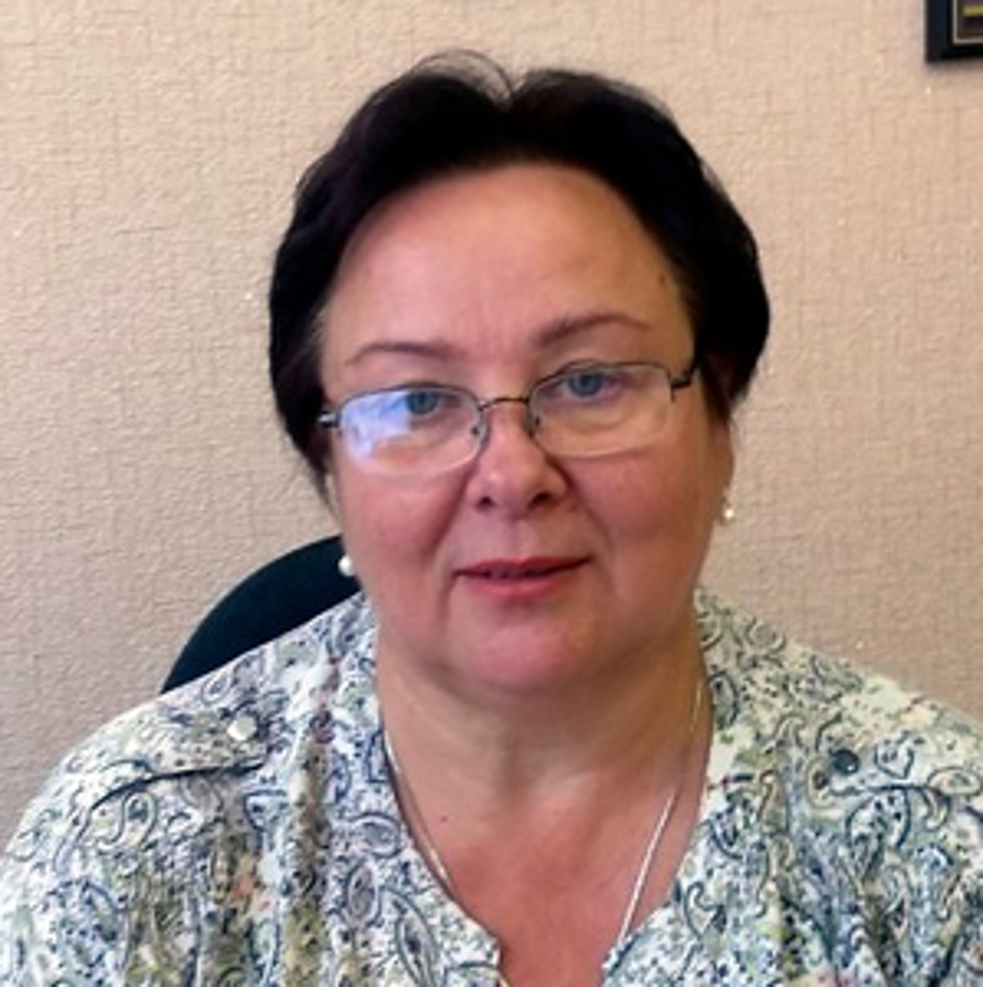
Head of the Velyka Oleksandrivka Community Nataliia Korniienko
“People want to understand what opportunities their children will have here, whether there will be jobs, and how education, healthcare and local businesses will develop. The strategy through 2034 helps us provide well-grounded answers to these questions,” says Nataliia Korniienko, Head of the Velyka Oleksandrivka Community.
Working together
The first two meetings of the strategy development working group took place in the community itself. Later, as the security situation deteriorated, the work had to move online.
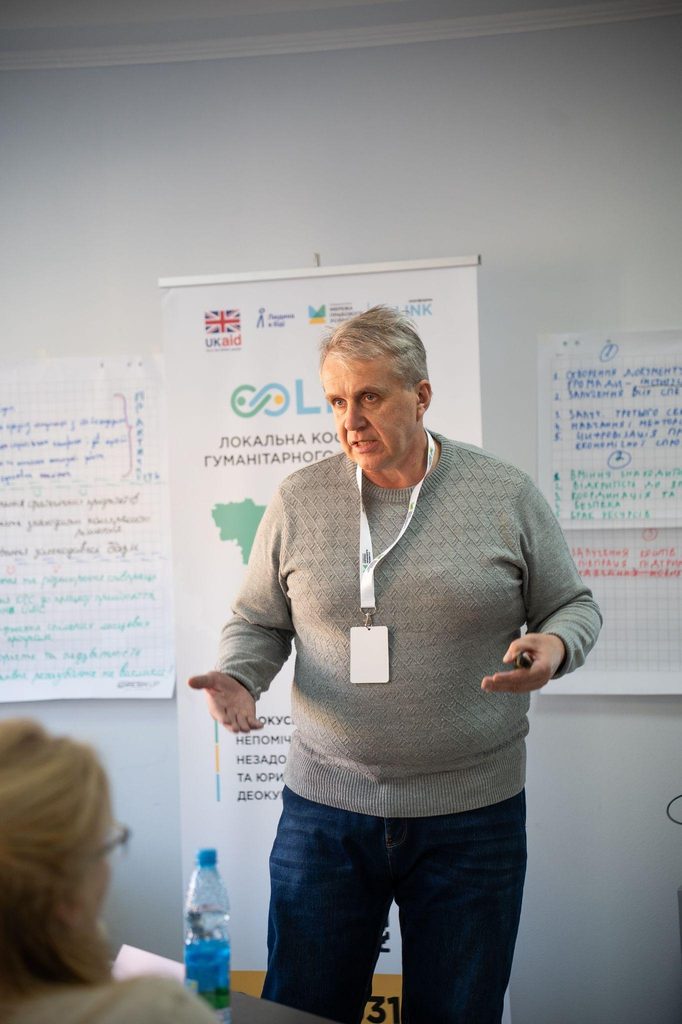
Strategic Planning Expert Taras Rashkevych
“In my view, in-person meetings in communities attract much greater public interest than remote ones. But the security situation usually leaves us with no choice,” says Taras Rashkevych.
The process involved starostas (heads of local administrative districts), representatives of the education and healthcare sectors, internally displaced people, veterans’ families, young people and entrepreneurs.
“I value the fact that people from different settlements and different walks of community life took part in the work. Everyone sees the situation through the lens of their own experience, and joint discussions help us better understand people’s needs and find solutions that everyone can agree on,” Nataliia Korniienko emphasises.
What the community wants to achieve
At the heart of the strategy for this frontline community are human potential and security; accessible healthcare, social and educational services; support for internally displaced people; the reintegration of veterans; and support for their families.
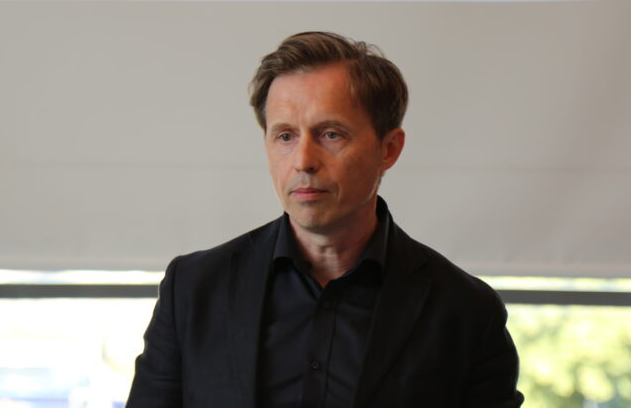
LDN Expert Robert Żarkowski. Photo: uacrisis.org
“The community’s future will not be determined by the number of facilities rebuilt, but by whether people want to stay, return and build their children’s future here. To make that possible, they need access to quality healthcare, municipal and cultural services, and above all, education. Education comes first — and its quality matters most,” says Robert Żarkowski, an expert engaged by the Legal Development Network and Director of the Foundation in Support of Local Democracy in the West Pomeranian and Kuyavian-Pomeranian Voivodeships of the Republic of Poland.
A second priority is equal access to services. The residents’ survey showed that services are currently distributed unevenly across the community.
“A strategic priority should be to create a network of services that minimises differences in their availability and quality, regardless of where people live — whether in the community centre or in a remote village,” Robert Żarkowski adds.
For Nataliia Korniienko, the effectiveness of the strategy will be measured in everyday terms.
“Residents need accessible services, a reliable water supply, and opportunities to study, find employment and start their own businesses. We truly want people to see their future in the Velyka Oleksandrivka community,” Nataliia Korniienko stresses.
Agribusiness, healthcare and the railway
When it comes to economic development, the community is focusing on agriculture.
“In early September, the Cabinet of Ministers amended the State Strategy for Regional Development, defining types of functional territories. The Velyka Oleksandrivka community is classified as a steppe territory, so its strategy identifies the recovery of the agricultural sector and the restoration of irrigation as priorities,” explains Taras Rashkevych.
To support local entrepreneurs, particularly those working in agriculture, the community is setting up a business centre. Entrepreneurs will be able to meet there, discuss work-related issues, share experience and receive assistance with preparing grant applications.
The community actively cooperates with the Kherson Oblast Regional Development Agency, which, in Taras Rashkevych’s view, demonstrates its openness to change. Two civil society organisations are also active in the community: Liha Aktyvnykh (League of the Active) and Syla Khersonshchyny (Strength of Kherson Oblast). Through their projects, they provide tangible support for the efforts of the local self-government body. For example, in cooperation with civil society organisations, the community has developed a local household waste management plan.
“The community has potential in beekeeping. This includes reviving the beekeepers’ cooperative, processing honey and developing a community brand. Honey can drive the development of an entire supporting infrastructure, and the community has recognised this as one of its unique strengths,” Taras Rashkevych notes, referring to working group ideas such as holding a honey festival and developing local artisan production.
To help local producers reach new markets, the damaged railway infrastructure needs to be restored. Existing rail transport corridors connect the community to major urban areas, including Dnipro and Kryvyi Rih, and, to the south, Kherson and Mykolaiv.
“Modernising and developing the railway infrastructure will open up new opportunities to access markets in Ukraine’s northern and southern regions. This is particularly important for selling agricultural products grown by local businesses and farms,” says Robert Żarkowski.
He sees local processing as especially promising: the community will be able not only to supply raw materials but also to sell finished products.
Healthcare is another area with significant growth potential for the community.
“As of today, the Velyka Oleksandrivka community is the only one on the right bank of the Dnipro in Kherson Oblast with a hospital providing secondary-level medical care. It is therefore working with French donors to establish a rehabilitation department: French international assistance is expected to provide UAH 90 million, with a further UAH 30 million allocated by the community itself,” says Taras Rashkevych.
Prospects for international cooperation
The Velyka Oleksandrivka community has extensive experience in international cooperation and has earned the trust of foreign partners. Between 2023 and 2026, it attracted almost UAH 170 million in international technical assistance.
As the community focuses its efforts on infrastructure modernisation and the development of municipal services and agriculture, Robert Żarkowski recommends that it continue to build international municipal partnerships in these areas. For example, cooperation on local transport could be promising with Polish gminas (municipalities) that have similar characteristics: settlements are dispersed, and ensuring access to services requires additional organisational and financial solutions.
The expert also believes that the Velyka Oleksandrivka community could benefit from Poland’s experience of intermunicipal cooperation in household waste management.
“In Poland, there are examples of several gminas joining forces to organise waste collection, transportation, processing and disposal, as well as to jointly manage the relevant infrastructure. Joint household waste management makes it possible to use resources more efficiently and reduce costs,” says Robert Żarkowski.
The expert also considers energy efficiency and the use of renewable energy sources to be promising areas. Here, too, it would be worthwhile to seek European partners with practical experience in implementing such solutions at the local level.
The strategy as a call to action
The strategic goals and action plan for the Velyka Oleksandrivka community for 2027–2029 have been developed. At the same time, the collection of project ideas is still underway: any resident or civil society representative can submit an idea. Experts are also working with the community to finalise the criteria for assessing the strategy’s effectiveness — the indicators and baseline data that will make it possible to track progress through 2034.
“What sets the Velyka Oleksandrivka community apart is that it was thinking about projects and preparing grant applications even while under occupation. For example, the community submitted an application and received international technical assistance in the form of a vehicle that enables administrative services to be delivered directly to residents in their localities. So, if the war were to end tomorrow, everyone would be starting from the same position. But this community, which already has a strategy and a set of project technical specifications, will be able to upload them to the DREAM system* and seek funding,” Taras Rashkevych emphasises.
*DREAM is a public investment management system. It ensures transparency and accountability in processes, open data and consistent approaches to investment management in line with international standards. A total of 1,377 Ukrainian communities, 24 Oblast Military Administrations (OMAs), 15 sectoral ministries, and the largest state-owned and municipal enterprises in Ukraine are already using DREAM. At every stage, the system publishes open data in accordance with the international Open Contracting Data Standard (OCDS).
The expert believes that having a strategy strengthens a community’s capacity. It is particularly commendable that people are shaping a vision for their future without waiting for the war to end. At the same time, the community’s development priorities are clearly aligned with the existing emergency response mechanisms.
“The development strategy gives particular attention to resilience and preparedness for crisis situations. These approaches are reflected in its strategic goals and objectives, including population safety, continuity of essential services and stronger institutional capacity at the community level,” says Svitlana Seldina.
Robert Żarkowski recommends that the working group responsible for developing the strategy remain active after it is approved.
“It is important for the team to continue working with the strategy and external partners at every stage of its implementation, especially during implementation and monitoring,” Robert Żarkowski stresses.
For her part, the community head sees the strategy as a practical guide that connects goals with specific projects, local programmes and budget decisions.
“Circumstances may — and will — change. Therefore, the implementation of the strategy will certainly need to be reviewed regularly,” says Nataliia Korniienko. “For me, the main measure of its quality is the extent to which it helps us make decisions that improve people’s lives and strengthen the community.”
Time will provide the answer. But even now, we can say with confidence that the Velyka Oleksandrivka community has done an enormous amount of work and has everything it needs for systematic strategic recovery and development.
In 2026, the Legal Development Network, in cooperation with the Czech humanitarian organisation People in Need and with financial support from the UK Government, helped the Velyka Oleksandrivka and Kalynivka communities in Kherson Oblast develop their strategies.
This article was prepared by the Legal Development Network in cooperation with the Czech humanitarian organisation People in Need and with financial support from the UK Government as part of the HAVEN project—Humanitarian Action through Volunteers, Enablers, and Networks.
The views expressed by the experts are their own and do not necessarily reflect the views of the organisations or the donor.
P. S. In June 2024, the Legal Development Network (LDN) launched a crowdfunding campaign, Recovery of The South of Ukraine , as part of the crisis response program #StandWithUkraine.
You can Recovery of The South of Ukraine |
If you have notices an error on the web-site, please, highlight the text and press ctrl-enter.
Print and place the Network's poster on a notice board in your entrance hall
Become a volunteer and assist others in finding problem solutions
0 800 331 113
from 10:00 to 17:00, toll-free within UkraineAsk a question, and one of the Network's experts will provide an answer.
Chat hours: daily from 10:00 to 16:00.
Ask questions via LawLink Bot in any convenient way. LawLink Bot is a smart and digital legal assistant created by the Legal Development Network.

The Legal Development Network implements comprehensive projects aimed at strengthening human rights, developing capable communities, and building sustainable tools for access to legal aid. We work at the intersection of advocacy, legal education, and local coordination of humanitarian response.

Support free legal aid in Ukraine. Your donation helps people affected by the war defend their rights in court and beyond.