Share on social media
Share
Tweet
Publication date: March 24, 2026
From dry statistics of ministries — to real keys to apartments in communities. The Legal Development Network, in partnership with the humanitarian organization «People in Need» and funded by the Czech Development Agency, has developed a systematic approach to the protection of the rights of internally displaced persons within the framework of the advocacy campaign, where data analysis becomes the foundation for practical tools. How to access closed databases, why «paper» programs do not work and how to turn housing issues into an investment in community development — read in the material below.

«Advocacy for the rights of veterans and internally displaced persons, which the Legal Development Network systematically carried out for two years, has become much more for us than a separate component of the project. It created synergy between different areas of work, made it possible to highlight key challenges and ensure a comprehensive impact on the development of communities. Advocacy — is a tool that is extremely difficult for communities to implement independently, because it requires expertise, systematicity and access to the national level of decision-making. It was thanks to the joint efforts of our organization and partners that we managed not only to strengthen the capacity of communities, but also to contribute to the solution of certain systemic issues at the national level. At the same time, this experience has shown us the potential for even greater impact in the future. Without exaggeration, the developed approaches have become especially valuable for the network, and today we are integrating them into new initiatives to ensure sustainable changes and strengthen the protection of people’s rights in communities», Legal Services Development Director of LDN Daria Kovalchuk says.
In the direction of protecting the rights of internally displaced persons, the Legal Development Network works systematically: starting with data and analysis, and ending with practical solutions for local self-government bodies and the displaced themselves.
The first step was working with real numbers. The team turned to the relevant Ministry of Social Policy to obtain information not only about the total number of internally displaced persons in communities, but also more data about vulnerable groups. For many communities, this is important, because not everyone has direct access to the IDP database.
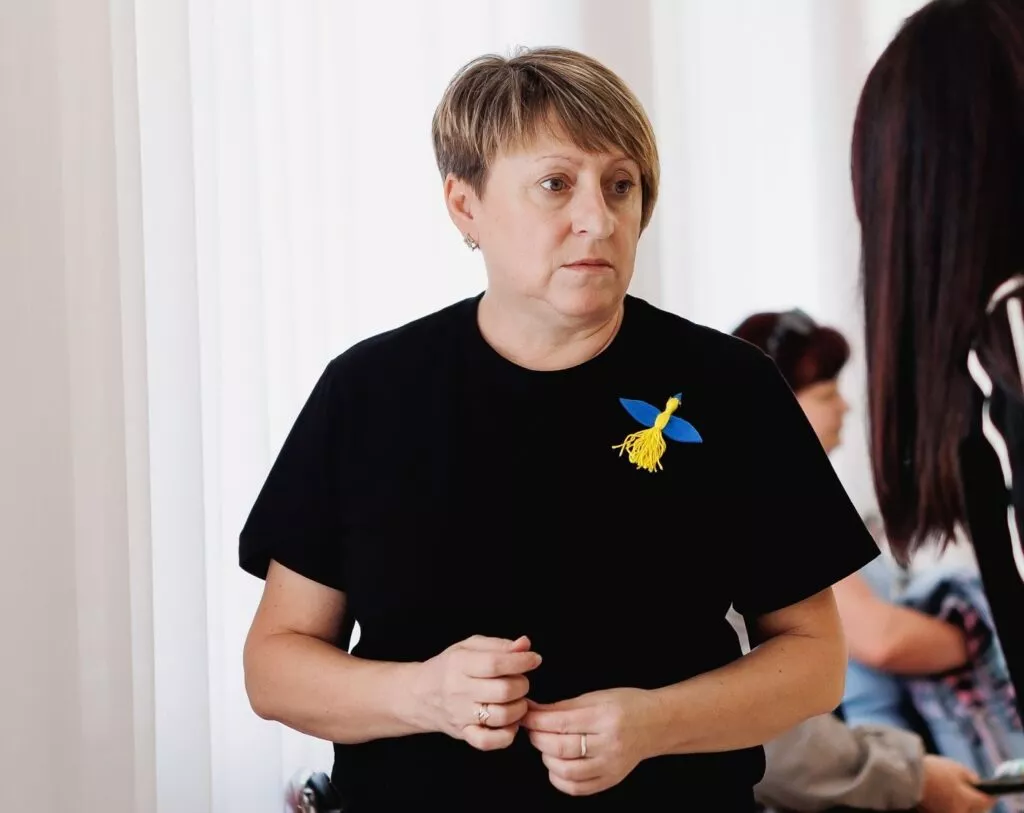
«We asked not only the number of IDPs, but also who exactly came: how many people with disabilities, how many elderly people, how many children. Because these are the most vulnerable categories of — and they are the ones who need community support. And not all territorial communities have access to the database: in fact, only a few cities. Therefore, we passed on to the communities the information we received from the ministry so that they could plan local programs», the LDN’s involved advocacy expert Lyudmila Yaremchuk explains.
The Network went on to collect data directly in communities and oblast state administration’s: whether apartment records are kept, whether social records are available, whether there is a temporary housing fund, how many temporary residences there are, whether there are IDP support programs and whether they are supported by funding. The results showed a typical problem: sometimes the program exists «on paper», but does not work due to lack of funds to implement it.
«We saw: there are communities where social housing records are not kept, where there are no places of temporary residence. And if the program is accepted, then without funding — it is declarative and does not work. It was important for us to first analyze what is really being done, and even then — to offer tools», Lyudmila Yaremchuk says.
The next step was practical assistance to communities — training and a ready-made «package of documents for the development of local programs with the involvement of State Youth Housing as one of the executors. The team prepared a project of the program and activities — communities had to adapt it to their conditions.
«We gave communities not just advice, but actually a ready-made project of the — program, it only needed to be updated to the local level. And it was a product that was then asked by other organizations — because they realized that it is a tool for improving the housing rights of IDPs», Lyudmila Yaremchuk says.
To hear internally displaced persons and compare the «view from the cabinet with reality, the Network conducted research among displaced persons.
«We did the analysis, saw the housing problem, and in the IDP survey we heard the same thing again: housing. Therefore, we summarized the results and sent recommendations to community leaders on how to solve problematic issues at the local level», Lyudmila Yaremchuk explains one of the key directions of — formation of housing stock.
At the same time, the LDN draws attention to the simple logic of communities’ interest: housing during war is a resource that can keep people in the community, which means — can support the economy and development.
Separately, the team systematized information on places of temporary residence and the possibilities of communities to create a fund of such housing: if necessary, the community can provide funds for the purchase of apartments or houses in order to provide IDPs with temporary housing under certain conditions.
«There is an order of the Ministry of Community Development regarding the list of places of temporary residence — there by region there is both the number of places, and contact persons, and information about the availability of free places. If the community does not have premises, it can provide funds in the budget and buy housing, create a temporary accommodation fund. We wrote about it in the recommendations», — Lyudmila Yaremchuk says.
Advocacy at the national level is also ongoing. In particular, the Network approached the government with a proposal to change the terms of mortgage lending in the «eOselya» program for IDPs — to lower the interest rate on loans so that the conditions for internally displaced people are truly accessible.
«We appealed for reduced lending conditions for IDPs as well. Because now, for example, teachers and doctors have 3%, and IDPs — 7%. We submitted the appeal in December 2025, it is currently under consideration. If it succeeded — it would be our pride», Lyudmila Yaremchuk concludes.
|
Отримайте поглиблену консультацію через чатбот LawLink
|
If you have notices an error on the web-site, please, highlight the text and press ctrl-enter.
Print and place the Network's poster on a notice board in your entrance hall
Become a volunteer and assist others in finding problem solutions
Ask question and one of the LDN's lawyers
will answer it.
Chat's schedule: from 10 to 16
every day
Ask questions via LawLink Bot in any convenient way. LawLink Bot is a smart and digital legal assistant created by the Legal Development Network.

The Legal Development Network implements comprehensive projects aimed at strengthening human rights, developing capable communities, and building sustainable tools for access to legal aid. We work at the intersection of advocacy, legal education, and local coordination of humanitarian response.