Share on social media
Share
Tweet
Publication date: March 12, 2026
Author: Link Platform Content Manager Valentina Chabanova-Babak
For three years, the Legal Development Network, in cooperation with the Czech humanitarian organization People in Need and with funding from the UK government, supported three hromads in southern Ukraine in developing and implementing recovery and development strategies. An important component of this was strengthening human capital so that those responsible for implementing the strategies had the necessary tools and knowledge to do so. We describe how this initiative was implemented and what the hromads’ journey has been like over these three years.
The Bilozerska Hromada in the Kherson oblast and the Mishkovo-Pogorilivska and Shevchenkivska hromads in the Mykolaiv oblast went through a difficult period at the beginning of the full-scale war: the Bilozerska and Shevchenkivska hromads were under occupation, while Mishkovo-Pogorilivska was surrounded. Despite this experience, after the security situation had relatively stabilised, the hromads were ready to engage in the process of developing strategic decisions and to acquire the tools and skills to manage their needs through the Link local humanitarian response coordination mechanism.
Step one: developing recovery and development strategies
During the first year of the project, all hromads’ developed recovery and development strategies with the involvement of a wide range of residents, representatives of various target groups, and local stakeholders. A participatory, people-centered approach was a guiding principle throughout the process and included facilitated discussions on the vision, priorities, and directions for hromada development.
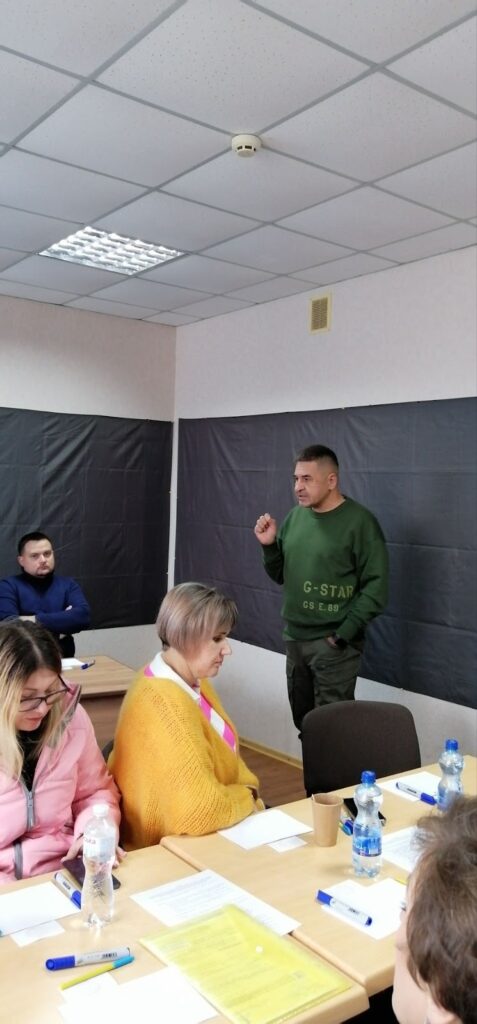
Head of Garnet Social Technologies Studio, PhD in Political Science, Strategic Development Coach, Facilitator Ruslan Bakhtiev
Involving representatives of different groups in the strategy development process made it possible to imbue the strategy with deeper meaning and helped participants see the interconnections between different sectors and social groups.
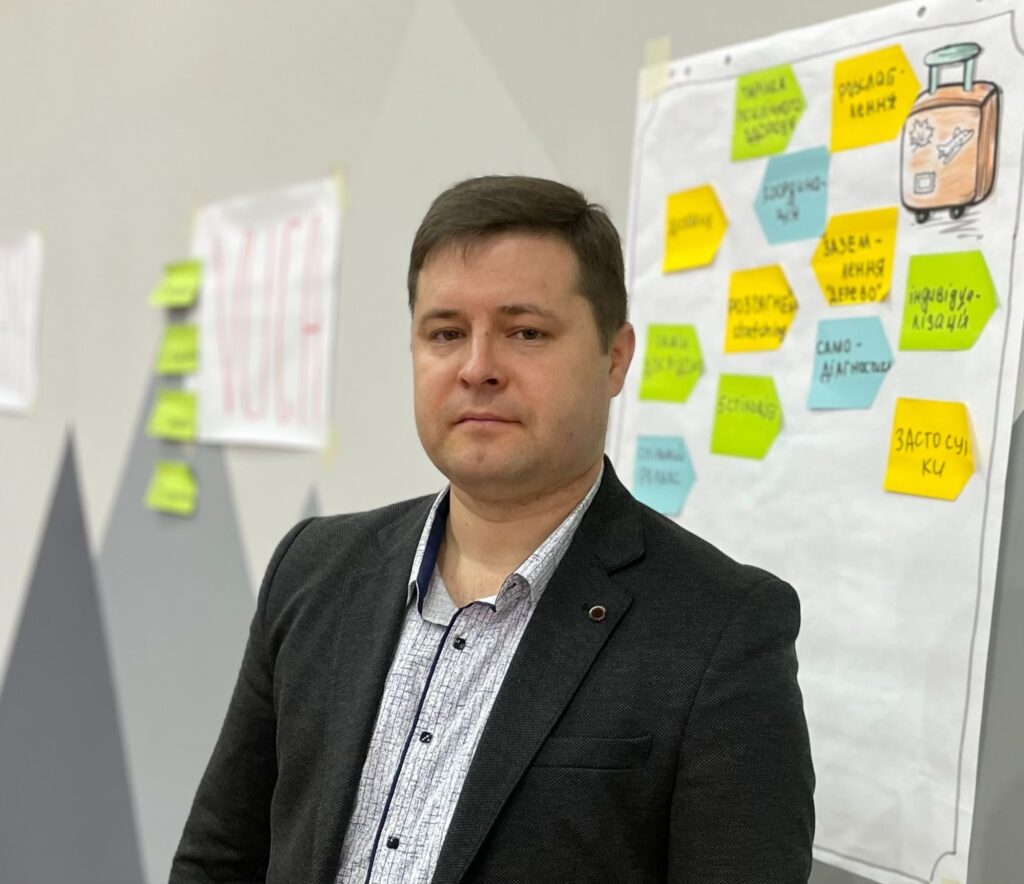
Head of the Shevchenkivska Hromada Oleh Pylypenko
“Business representatives said at the time: ‘This is the first time we have been invited and asked how we see the development of the hromada.’ It was also very important to bring together representatives of local government from different departments: culture, education, social protection, the executive committee, and deputies. Usually, each employee works in their own “bubble” and does not think about the problems of the neighboring department. When a social protection specialist attends a session where medicine, veteran hubs, or youth spaces are discussed, their horizons expand. This allowed everyone to understand common issues and develop a unified vision of what we want to achieve,” explains Head of the Shevchenkivska Hromada Oleh Pylypenko.
An expert and facilitator involved in the project Ruslan Bakhtiev, recalls that the work in the Shevchenkivska and Bilozerska hromads was very different. The Bilozerska Hromada still faces a very difficult security situation, with almost all of its settlements under constant shelling.
Head of the Bilozerska Military Administration, Ihor Ostrovniy
“We developed a strategy, but planned it with the assumption that the war would end or we would leave the active combat zone. Unfortunately, however, our entire Hromada has been directly in the combat zone for almost three years now,” says Head of the Bilozerska Military Administration Ihor Ostrivnyi.
Despite the difficult security situation, the Bilozerska Hromada has seen some success in the development of educational institutions.
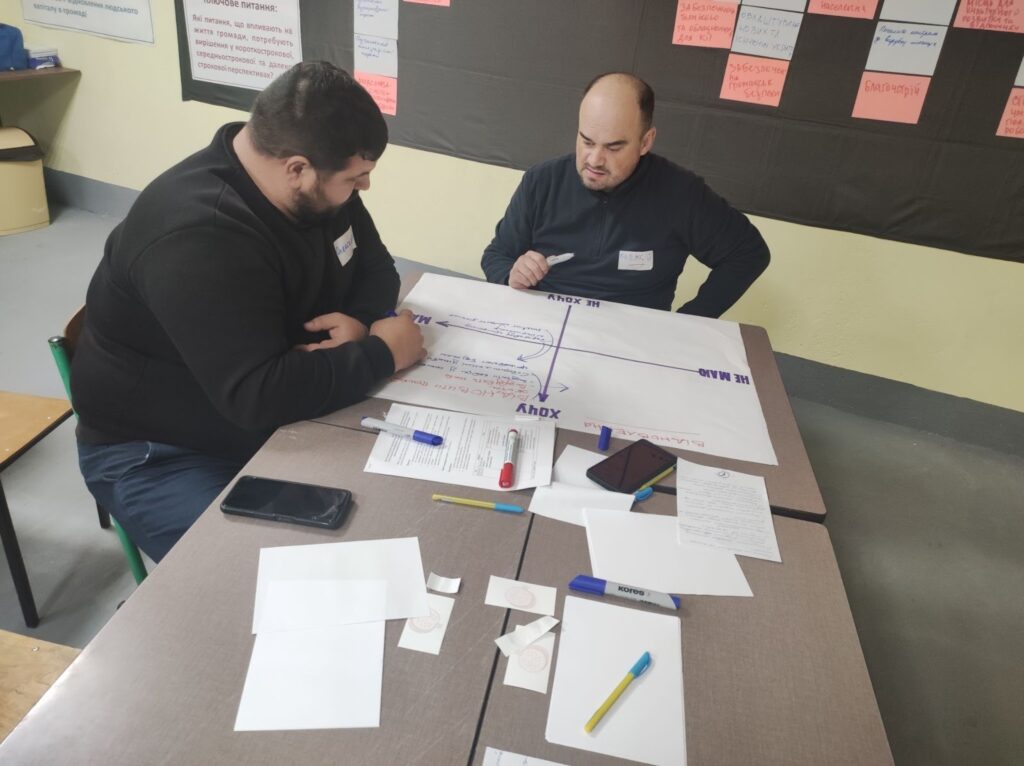
Deputy heads of the Bilozerska Military Administration Oleksandr Vasylenko (left) and Oleksiy Zhuravlenko (right)
“In the remote village of Myrolyubivka, we were able to organize a school with a mixed learning format. It is perhaps the only school in the active combat zone that continues to operate,” says deputy Head of the Bilozerska settlement military administration Oleksiy Zhuravlenko.
Thanks to the development of strategies, hromads began to think not only operationally but also strategically, planning further development for several years ahead.
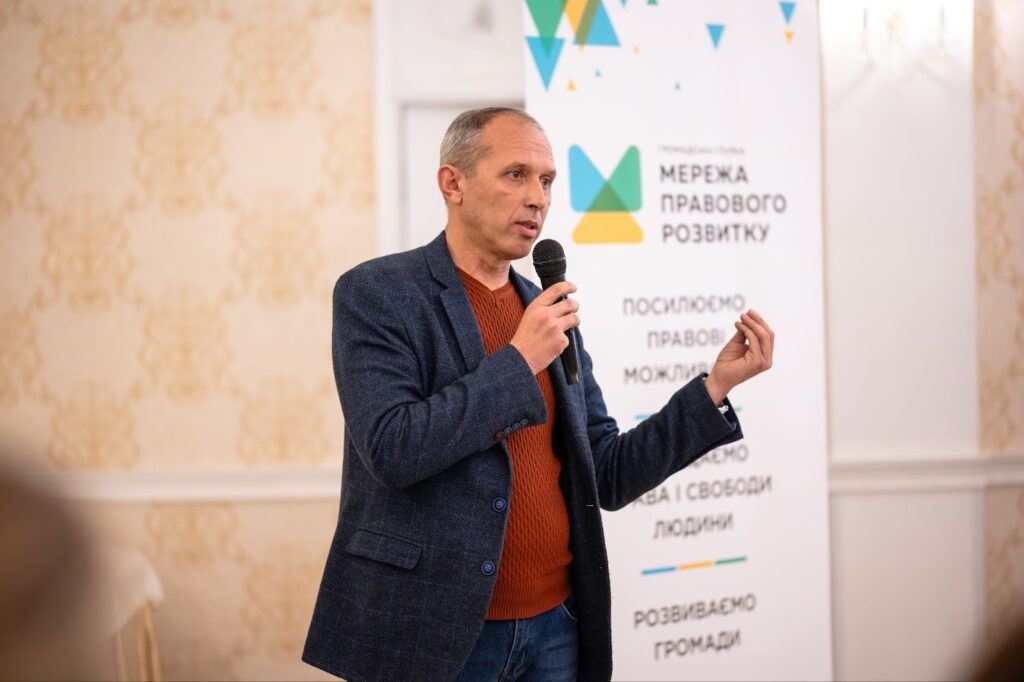
Head of the Mishkovo-Pogorilivska Hromada in the Mykolaiv oblast Andriy Botanin
“Previously, we worked more intuitively: if there was a need, we addressed it; if there were resources, we utilized them. Today, we have a clear understanding of where we want to be in 2027,” says Head of the Mishkovo-Pogorilivska Hromada in the Mykolaiv oblast Andrii Botanin.
Training sessions for Hromada organizations and Hromaada’ initiative groups became an important component in creating the conditions for the effective implementation of strategies. The main topics were social entrepreneurship, project management, and communications. They also discussed how to register a Hromada’ organization. This was relevant for initiatives that did not yet have formal registration. An important issue was Hromada identity.
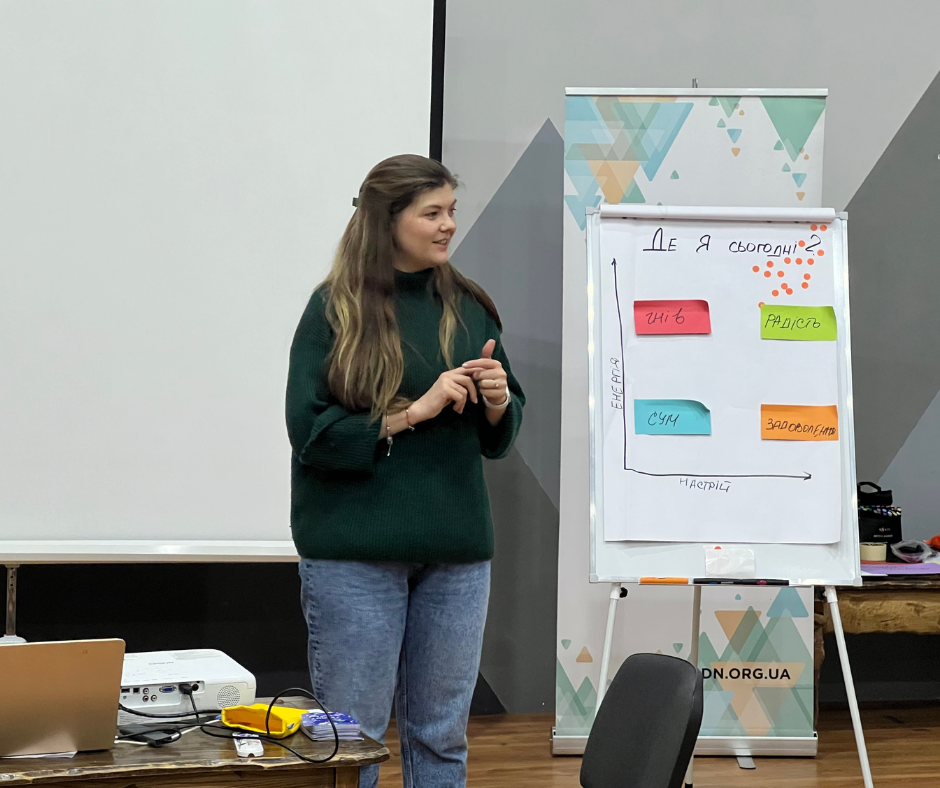
Director of Organizational Development Legal Development Network Iryna Chaika
“The initiative groups felt that they were not only addressing their own basic needs — for example, coming together to develop a park—but also working and influencing the development of the Hromada as a whole,” says Director of Organizational Development at the Legal Development Network Iryna Chaika.
Training for hromads: leadership, project management, resilience
Training was provided for all hromads by specialists from various local government departments on leadership skills, the basics of project management, and team management. Special attention was paid to resilience skills. After all, all the hromads that participated in the project, especially Bilozerska, are located close to the front line. They have gone through and continue to go through difficult times.
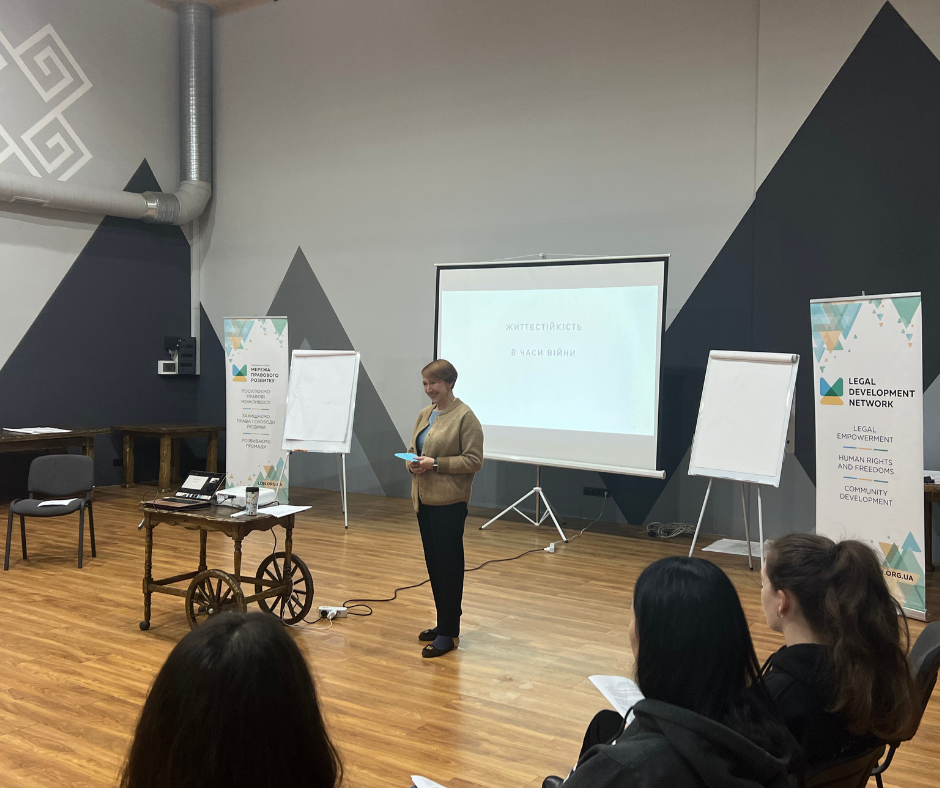
Business coach, facilitator, and psychotherapist Svitlana Savchuk
“In fact, these people already have their own recipe for resilience. When you approach them with this topic, you realize that you are dealing with true bearers of these formulas. However, everyday, mundane experiences are often not recognized as a source of strength. My job was to gather their experiences, reflect on them so that people would realize what unique experiences they have, and teach them how to use these experiences for even more challenging situations in the future,” explains business coach, facilitator, and psychotherapist Svitlana Savchuk.
The leadership and management training sessions, also conducted by Svitlana Savchuk, were based on facilitation — lively conversations with teams.
“We didn’t come with the attitude of ‘teaching you because you don’t know something’. We brought existing experience to the surface, structured it, and showed them, ‘Look, you can also do it this way.’ The brain, by its nature, does not like change, but when new information is presented as a tool for easier conflict resolution or engaging people, it arouses keen interest,” says Svitlana Savchuk.
Ruslan Bakhtiev used the same approach in his work.
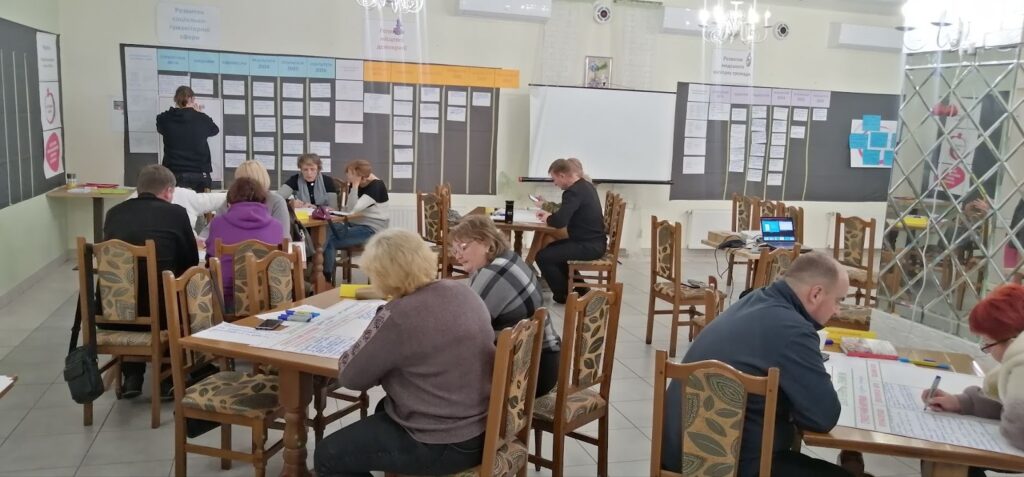
Strategy development in the Bilozerska Hromada
“Don’t teach, don’t lecture, just help. Hromads have good specialists, but they often lack the resources to provide quality services. Our job is to help them see opportunities, financial resources, and attract people,” says Ruslan Bakhtiev.
The hromads immediately integrated the new skills into their work and, during subsequent training sessions, shared what worked and what didn’t. In addition, hromada leaders noted the professional growth of their teams. The training sessions also resulted in decisions to add new positions to the teams.
“I have been working as a village head for 10 years and used to proudly say that I had no deputies. I trained people to call me personally with any questions, from medicine to education. However, now I understand that the workload is such that I need a deputy manager for investments and projects. This decision came about precisely because of our joint project and educational processes,” says Head of the Mishkovo-Pogorilivska Hromada in the Mykolaiv oblast Andriy Botanin.
Final stage: summing up
The third year of work focused on deepening the achievements gained during the first two years. Attention was also paid to the final results that the hromads will have after the end of the cooperation. In addition, meetings were held in the Shevchenkivska hromada to develop a strategy for responsible partnership and conscious living.
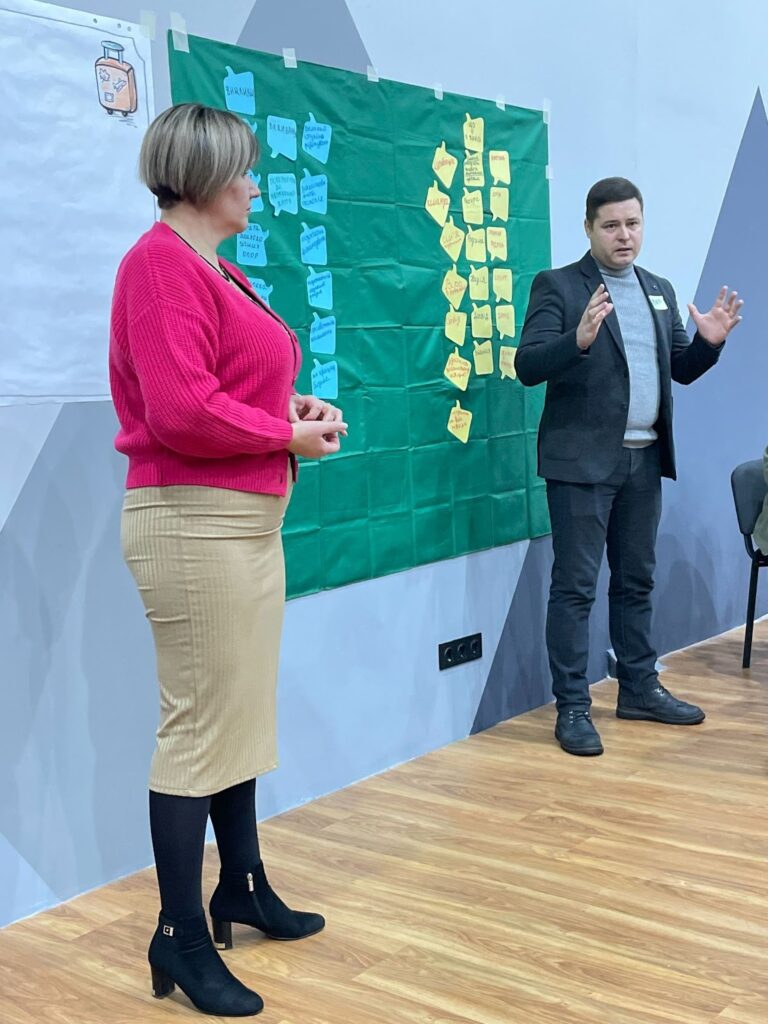
Oleh Pylypenko during strategy planning
“What makes our hromada unique is the activity of civil society organizations. At first, there were three of them, now there are more than 15. We recently signed a memorandum on the creation of a coalition of civil society organizations in the Shevchenkivska hromada. What’s more, we adopted a budget support program for this coalition,” says Head of the Shevchenkivska Hromada Oleh Pylypenko.
Working and learning in cooperation with the Legal Development Network has helped hromads take a fresh look at their own management structure—not only through the prism of positions and functions, but above all through the people and the relationships between them.
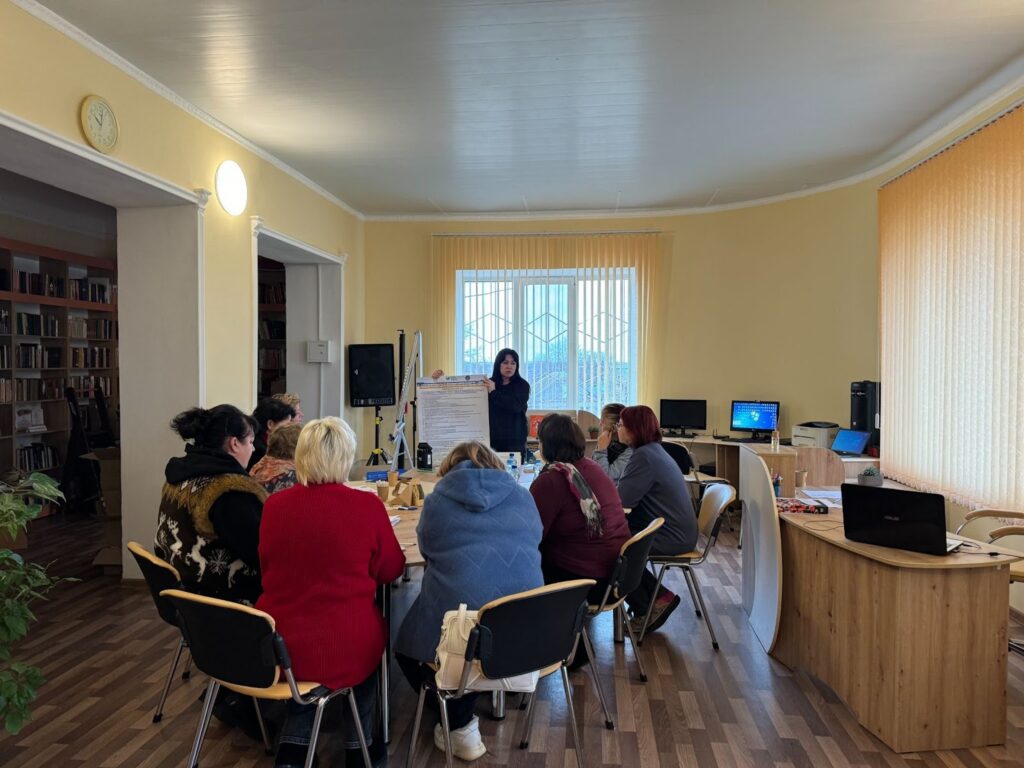
Working on a development strategy in the Mishkovo-Pogorilivska Hromada
“Working with the Legal Development Network has been a huge boost for us. We’ve become like a family where we can talk about anything openly, whether it’s salary projects or analyzing work processes. We have now asked experts to inspect our structure and workplace planning. It is important for me to get an outside perspective: perhaps we are short of deputies, or something is not working properly in the departments. Previously, I did not ask how much it cost to complete tasks — the main thing was that there were no complaints. But now I understand that this is strategically wrong,” says Head of the Mishkovo-Pogorilivska Hromada in the Mykolaiv oblast Andriy Botanin.
The material was prepared by the Legal Development Network in cooperation with the Czech humanitarian organization People in Need and with the financial support of the UK government.
|
Отримайте поглиблену консультацію через чатбот LawLink
|
P. S. In June 2024, the Legal Development Network (LDN) launched a crowdfunding campaign, Recovery of The South of Ukraine , as part of the crisis response program #StandWithUkraine.
You can Recovery of The South of Ukraine |
If you have notices an error on the web-site, please, highlight the text and press ctrl-enter.
Print and place the Network's poster on a notice board in your entrance hall
Become a volunteer and assist others in finding problem solutions
Ask question and one of the LDN's lawyers
will answer it.
Chat's schedule: from 10 to 16
every day
Ask questions via LawLink Bot in any convenient way. LawLink Bot is a smart and digital legal assistant created by the Legal Development Network.

The Legal Development Network implements comprehensive projects aimed at strengthening human rights, developing capable communities, and building sustainable tools for access to legal aid. We work at the intersection of advocacy, legal education, and local coordination of humanitarian response.