Share on social media
Share
Tweet
Publication date: June 8, 2026
Author: Yuliia Bilyk, LDN’s Communications Manager
Five years into the full-scale war, the humanitarian response in Ukraine continues to face challenges. In some communities, aid efforts overlap: several organizations are addressing the same needs without knowing about each other, while in others, people are being overlooked. Border communities live in an information vacuum, teams are burning out, funding from international partners is shrinking, and the regulatory framework for aid distribution remains unregulated. Participants in the expert discussion “Humanitarian Response from South to North: How Organizations Can Strengthen Each Other in 2026,” organized by the Legal Development Network (hereinafter the Network, LDN) in partnership with the Czech humanitarian organization “People in Need” with financial support from the UK government.
The online event was attended by representatives of local, national, and international civil society organizations and charitable foundations from the Kherson, Mykolaiiv, Sumy, Chernihiv, Dnipropetrovsk, Zaporizhzhia, and other regions, as well as representatives of regional and district authorities, community leaders, volunteers, activists, and media professionals. Here’s more about the discussion and its outcomes.
A single goal — joint action
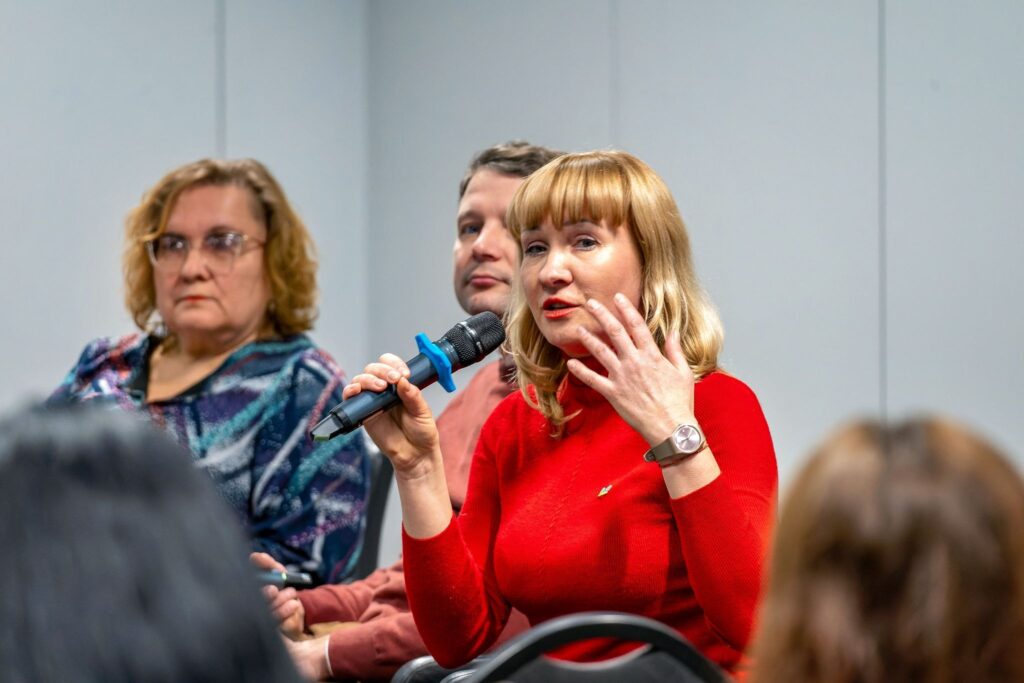
“The key challenge in the field of humanitarian response lies not only in the lack of resources under current conditions,” noted Executive Director of the Legal Development Network Olga Nastina. “Often, the lack of connection between the needs of people and communities and the organizations that can help comes to the fore. That is why we at the Legal Development Network have begun to develop Link, a mechanism for local coordination of humanitarian response.”
Olga Nastina emphasized that the LDN is not focused on merely identifying problems and potential solutions. The organization plans a systematic transition toward joint advocacy.
Viktor Alkhimov, LDN project manager and coordinator of the Water, Sanitation, and Hygiene (WASH) cluster in the Mykolaiiv region, added that the reduction in international funding makes coordination between organizations not merely desirable, but necessary.
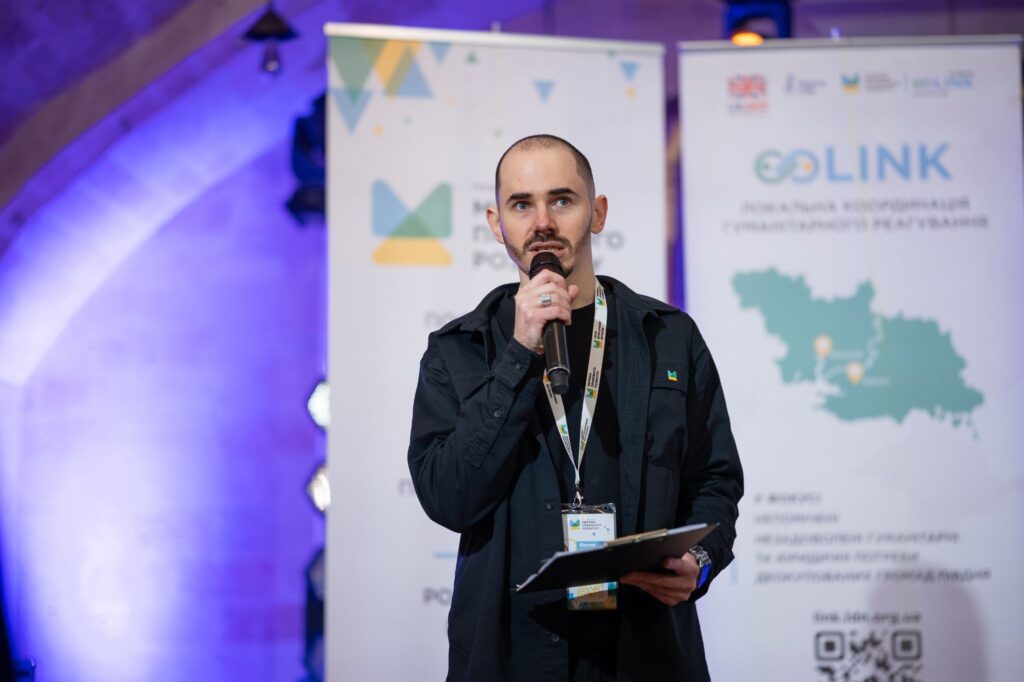
“As representatives of the humanitarian sector, we are the ones who can address a wide range of needs in communities that the government, for obvious reasons, is currently unable to meet. That is why, now more than ever, we must come together and work in unison,” emphasized Viktor Alkhimov.
Link — a tool that sees what others don’t notice
Link is a mechanism for collecting, verifying, and monitoring humanitarian needs in the Mykolaiiv and Kherson Oblasts. The mechanism is implemented by the Ministry of Reintegration in partnership with the Czech humanitarian organization “People in Need” and with funding from the UK Government. Since September 2023, the Link team has established a sustainable presence in de-occupied communities.
Currently, the mechanism covers 25 communities in the south, over 340 settlements, 17 specialists based in Mykolaiiv, Kherson, and Zelenodolsk in the Dnipropetrovsk Oblast who collect unmet humanitarian and legal needs, and over 1,000 local informants. Informants are local residents of villages and towns in de-occupied communities: social workers, educators, government officials, and activists. Every two weeks, they communicate with LDN’s specialists — by phone or in person — and update the data on needs. Every reported need is verified by at least two independent sources before it is posted on the platform.
The Link platform has two dashboards: one for communities and one for CSOs. The first is for reporting needs: community representatives enter the category, quantity, location, and description. The CSO dashboard is for organizations ready to meet these needs: through the catalog, they can find current requests, filter by keywords or location, and reserve a need — in full or in part — by specifying the planned completion date. After confirmation from both sides, the partner receives the community representative’s contact information and establishes direct communication.
“When creating Link, we started from the understanding that there is a large pool of unmet needs in communities,” explained Viktor Alkhimov. “And the best thing we can do is to join forces, understand what resources are available, and avoid duplication.”
Learn more about the rollout and implementation of Link in the guide.
Any organization can register on the Link platform. To do so, simply submit an access request and, after confirmation from the Legal Development Network, gain access to the CSO Dashboard. In addition to directly addressing needs, the platform accumulates a data set useful for planning: organizations can use analytics when preparing project proposals, as well as for advocating for challenges at the cluster and national coordination structure levels.
Kherson Oblast: Different Communities — Different Contexts
The Lead Manager of the regional community engagement and development division for the Kherson region at the nonprofit organization “The Tenth of April” Olha Kartashova shared her experience working with Link. The organization’s activities cover all the de-occupied communities in the Kherson Oblast.
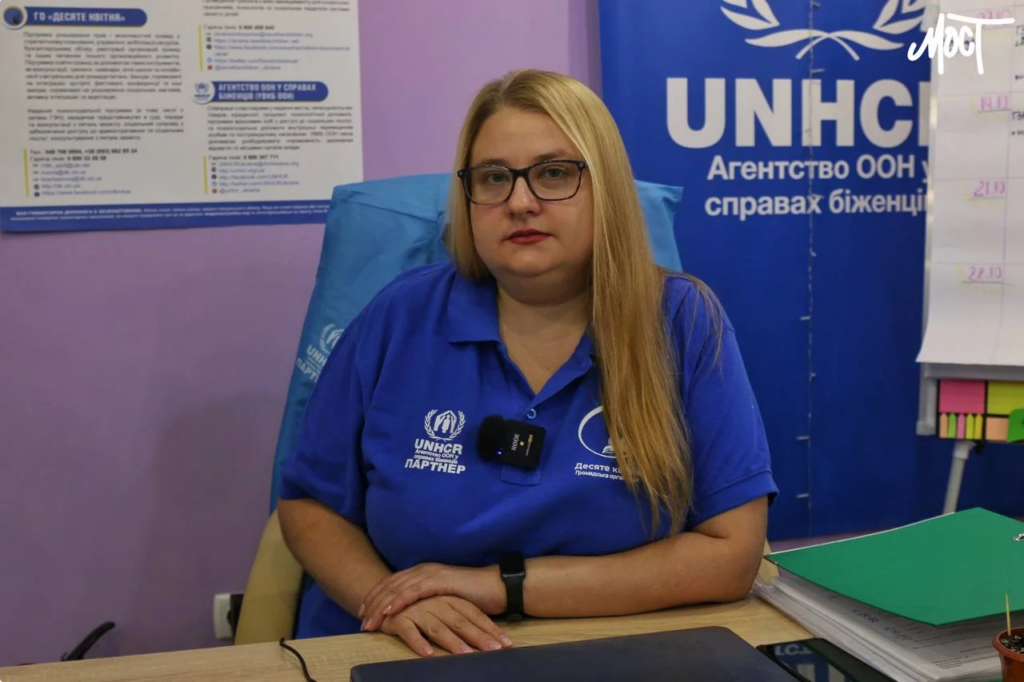
“Our social workers retrieve verified needs from the Link platform, and we collaborate effectively,” said Olha Kartashova.
According to Olha Kartashova, what is particularly valuable is that Link identifies needs in very remote communities where no other humanitarian response actors are present.
“Link’s specialists collect and verify individual needs in communities where we often see neither other civil society organizations nor mobile response teams,” noted the representative of the NGO “The Tenth of April.”
One aspect the partner considers critical is security.
“The security situation very often prevents us from quickly reaching a community. But a request from that community must still be made, and it must be up-to-date,” emphasized Olha Kartashova.
In other words, even when physical access is blocked, the network of informants allows us to stay on top of the situation.
According to Olha Kartashova, the context in the Kherson Oblast cannot be uniform: some communities located 10-20 km from the front line are operating in crisis response mode, while those closer to Mykolayiiv or Kryvyi Rih are already thinking about recovery and strategic development.
Another trend noted by our partner organization is that, despite all the challenges, new, young local organizations are emerging even near the front lines — organizations that are ready to accept small grants and support their communities.
“There are more and more such organizations, and the public is beginning to understand what the civil society sector can do,” noted Olha Kartashova.
Sumy Oblast A Stable Partnership Between Government and the Public
The length of Sumy Oblast’s border with Russia is 562 km, and the distance from the city of Sumy to the contact line has already shrunk to 18-20 km. The cities of Shostka and Hlukhiv are also located right next to the border. Under such conditions, any coordination requires a special bond of trust.

Executive Director of the Sumy-based LDN’s member organization “Northern Human Rights Group” Nataliia Yesina noted a significant change: “While in 2022 we operated spontaneously, on a volunteer basis, and chaotically, addressing the most basic needs, by 2026 we had transitioned to models of sustainable partnership.”
From the start of the full-scale invasion, the Northern Human Rights Group consciously reduced competition: it brought together aid providers in the Sumy Oblast for regular informal meetings outside of clusters to update roadmaps, avoid duplicating efforts, and redirect requests among themselves.
“If something extraordinary happens, we have no problem referring cases to one another,” said Nataliia Yesina.
Among the recommendations voiced by the NGO director was strengthening the role of regional coordinators, who understand the region’s specifics and can adapt international standards to real-world conditions.
The Deputy Head of the Sumy Oblast State Administration — Head of the Regional Military Administration Olena Kireieva presented the government’s perspective and focused on two challenges. The first is unevenness.
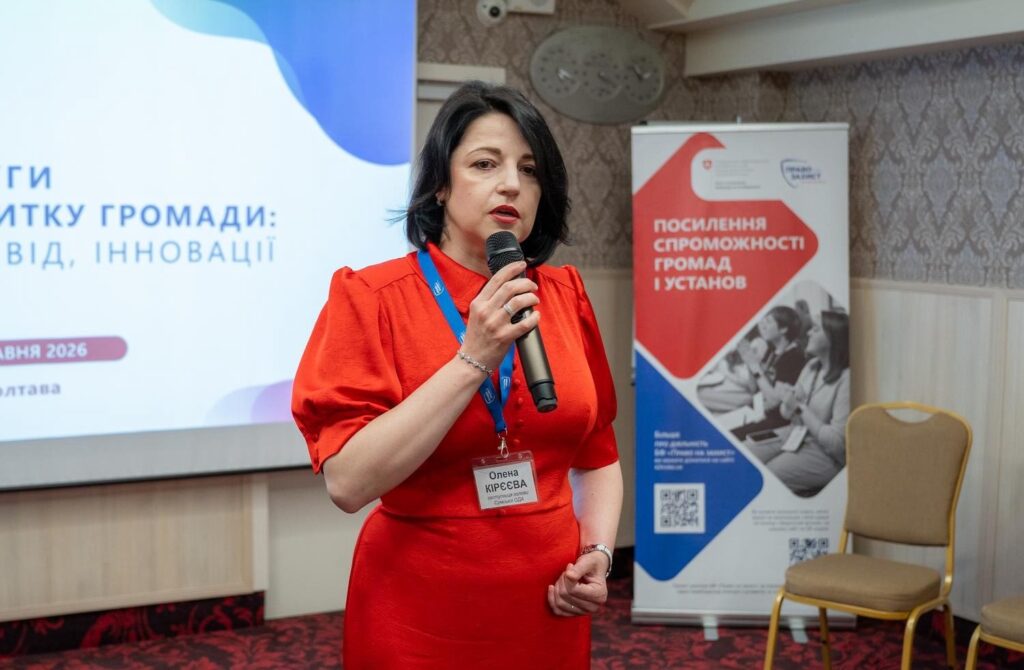
“Some communities are oversaturated, while others are unable to receive sufficient aid. We see this and try to direct our partners’ efforts where the need is greatest,” said Olena Kireieva.
The second challenge in the Sumy Oblast is dependence on donors.
“A significant portion of the aid comes from international organizations. This creates a risk of instability if support decreases. We need a reserve,” the official emphasized.
At the same time, the Sumy Oblast State Administration is ready to serve as a platform between communities and partners.
“If you work alone and without coordination, this aid will not be used effectively,” said Olena Kireieva, adding for those who are still hesitant to reach out to the authorities: “Knock, and the door will be opened to you. If you don’t speak up for yourselves, it will be hard for us to know about you.”
Chernihiv Oblast: Practical Experience with Flexible Humanitarian Response
Another northern Oblast — Chernihiv — also has its own unique characteristics: there is no mandatory evacuation here. As a result, the organizational burden falls either on the people themselves or on civil society organizations.

The Program director of the LDN’s member organization “Chernihiv Public Committee for the Protection of Human Rights” Nataliia Kulikova described a situation all too familiar to border regions:
“People in these communities are like they’re on a deserted island, with just 10 to 15 people nearby — and that’s it.”
Connecting to digital systems, finding an organization on a map, or calling a hotline is often physically impossible for residents of border villages.
Nataliia Kulikova identified the lack of coordination in humanitarian response as a systemic challenge:
“The Chernihiv and Sumy Oblasts live under constant security risks, border shelling, infrastructure destruction, and repeated waves of population displacement. Rapid local coordination, team mobility, and the ability to adapt humanitarian aid to the constantly changing situation are of great importance. The problem arises when one person assesses needs, another distributes aid, and a third provides services, yet they do not coordinate with one another.”
According to Natalia Kulikova, the challenges facing the northern regions remain the heavy workload on local specialists, limited access to specialized services, and the need for constant cross-sectoral collaboration. At the same time, it is precisely these conditions that have fostered significant practical experience in flexible humanitarian response, working in small communities, building local partnerships, and adapting aid to the conditions of a protracted crisis.
“Such experience can be useful for other regions of Ukraine facing similar challenges,” noted Nataliia Kulikova.
Dnipropetrovsk and Zaporizhzhia: Challenges of a Rear Hub and a Legal Deadlock
Head of the LDN’s member organization “Center for Support of Local Initiatives” Oleksiy Kormiletskyi described Dnipropetrovsk Oblast as a region with a dual role: a rear logistics hub that is constantly adapting to the flows of internally displaced persons. This requires, in his words, a shift from acute response to comprehensive support.
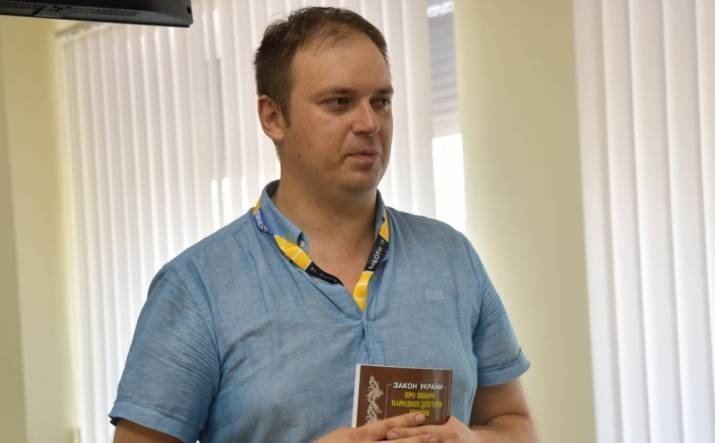
“By 2026, we need to be thinking not only about addressing immediate needs, but also about what will happen to the individual next. Will they integrate into the community? Will they resolve their legal issues? Will they be left to face their problems alone once the project ends?” explained Oleksii Kormiletskyi.
He also called on the discussion participants to practice institutional integrity.
“The civil society sector will not grow stronger if we only showcase positive results. We need to talk about what didn’t work — where we failed to reach people, where we didn’t take the local context into account,” emphasized the NGO’s director.
Head of the LDN’s member organization “Strategies and Technologies for Effective Partnership” (STEP) from Zaporizhzhia Oleksiy Agentaiev raised an issue that, in his words, hinders even the existing assistance.
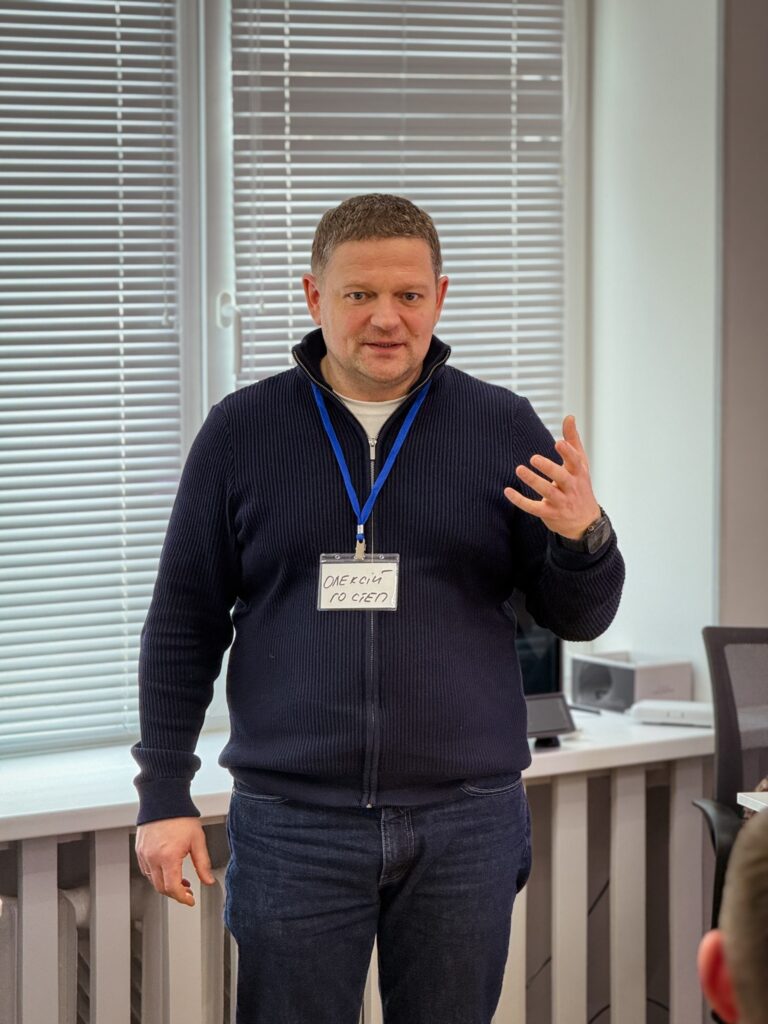
“There is an international organization ready to help. But the implementation of this aid is being held up. The reason is that few people understand how to formalize this and report on it at the legislative level. Several departments are passing the buck to one another. Meanwhile, 30,000 food packages are waiting to be distributed, just waiting for someone to take responsibility,” Olexiy Agentaiev shared his discouraging experience.
Agenda Items
To wrap up the event, participants established a common framework for future advocacy. Among the key issues:
— Regulatory framework for the accounting, storage, and distribution of humanitarian aid, so that organizations can confidently receive and report on aid without legal risk;
— Strengthening local teams and regional coordinators capable of adapting standards to the specific conditions of a particular region;
— Expanding access to the Link platform for all border and frontline communities that are physically cut off from digital tools and coordination systems;
— Shifting from competition to partnership amid declining donor funding.
The Legal Development Network documented all the identified humanitarian response challenges and reported them to the Ministry of Social Policy. The LDN has recently initiated close cooperation with this ministry, which spearheaded the unification of volunteers and philanthropists. The outcome of the expert discussion is merely the beginning of the next phase of work — advocacy.
The conclusions, interpretations of the collected information, and other content presented in this material represent solely the authors’ views and do not reflect the opinions of the project’s donors and partners.
The Link mechanism for local coordination of humanitarian response is being implemented by the Legal Development Network in cooperation with the Czech humanitarian organization “People in Need” and with financial support from the UK Government.
Question: How can we ensure the effective allocation of resources and avoid duplication of aid amid funding cuts?
What is the problem: Organizations often have a fragmented view of the situation on the ground, leading to a situation where one community receives an excessive amount of a certain type of aid, while another goes unnoticed. There is also a gap between the needs identified by the authorities and the actual basic needs of residents.
Possible solutions
Question: How can we address gaps in legal awareness among local authorities, various departments, and other entities that hinder a rapid response to needs and the effective tracking and distribution of aid?
What is the problem: Local and state authorities lack a common understanding of the appropriate regulatory framework that would clearly govern the processes of accounting for and storing aid in warehouses, as well as uniform rules for its distribution. This creates difficulties for local authorities, who are often reluctant to accept aid due to the absence of clear reporting procedures. Uniform protocols for interaction between the humanitarian and government sectors regarding the acceptance, storage, and distribution of aid at the national level have not been developed or disseminated for use.
Possible solutions:
Question: How can we shift the approach to humanitarian response from short-term to long-term (sustainable)?
What is the problem: Many communities and organizations are still operating in “2022 mode”—reactively distributing food kits without considering a strategy for integrating aid recipients, their employment, and long-term needs. This creates a risk of instability in the event of a further reduction in donor support.
Possible solutions:
Question: How can we ensure access to services and information about them for residents of “gray zones” and remote settlements?
What is the problem: In communities near the border or the front line (within a 15–20 km zone), there is often an information vacuum: a lack of stable communication, internet, and GPS coordination. People do not know where to obtain legal assistance or basic services.
Possible solutions:
Question: How can we strengthen the capacity of small local organizations to access resources?
What is the problem: Large international grants are often inaccessible to small community-based organizations due to complex procedures, even though these organizations enjoy the highest level of trust and have the best understanding of the local context.
Possible solutions:
Question: How can we operate in a region where the context of communities varies so drastically—from crisis response to recovery planning?
What is the problem: Large international organizations often offer grants that are inaccessible to small local NGOs. Some organizations end up addressing needs that have already been met due to a lack of coordination. About 65% of residents in frontline communities are elderly, which determines the nature of their needs. Large organizations are unable to conduct post-distribution monitoring because it is physically impossible to reach the settlements to carry out inspections.
Possible solutions:
Question: How can a model of sustainable partnership between NGOs, local authorities, and clusters be established in a border region?
What is the problem: The longest border with Russia (562 km) and the proximity of major cities to the contact line significantly complicate the work. In border communities, there is an information vacuum: no mobile internet and limited access to digital services. Not all local authorities are equally interested in coordinating with civil society.
Possible solutions:
Question: How can we organize a systematic response in a region that serves both as a rear hub and a frontline zone, with an uneven distribution of the workload?
What is the problem: Access to aid varies significantly between large cities and small frontline settlements. Organizational teams are exhausted and operate reactively rather than systematically. Some local authorities remain stuck in the mindset of 2022. There is a lack of common aid routes and a clear understanding of mandates among authorities, NGOs, and the population. Delays in the receipt and distribution of humanitarian aid arise due to a lack of understanding of reporting procedures at the local government level.
Possible solutions:
Question: How can we ensure a humanitarian response in a region where evacuation is voluntary and people repeatedly return home?
What is the problem: Voluntary evacuation effectively falls on the shoulders of civil society organizations, not the state. Communication between local authorities and NGOs is established, but the connection between NGOs and communities is weak. Clusters and local authorities rarely visit communities, especially those along the border. Border communities lack both internet and GPS, making digital solutions unviable there. Specialists are on the verge of burnout due to prolonged stress.
Possible solutions:
P. S. In June 2024, the Legal Development Network (LDN) launched a crowdfunding campaign, Recovery of The South of Ukraine , as part of the crisis response program #StandWithUkraine.
You can Recovery of The South of Ukraine |
If you have notices an error on the web-site, please, highlight the text and press ctrl-enter.
Print and place the Network's poster on a notice board in your entrance hall
Become a volunteer and assist others in finding problem solutions
0 800 331 113
from 10:00 to 17:00, toll-free within UkraineAsk a question, and one of the Network's experts will provide an answer.
Chat hours: daily from 10:00 to 16:00.
Ask questions via LawLink Bot in any convenient way. LawLink Bot is a smart and digital legal assistant created by the Legal Development Network.

The Legal Development Network implements comprehensive projects aimed at strengthening human rights, developing capable communities, and building sustainable tools for access to legal aid. We work at the intersection of advocacy, legal education, and local coordination of humanitarian response.

Support free legal aid in Ukraine. Your donation helps people affected by the war defend their rights in court and beyond.