Share on social media
Share
Tweet
Publication date: November 16, 2026
Why do some civil society organizations sail through donor assessments as a mere formality, while for others the process becomes a barrier to partnership? The Legal Development Network (LDN), which has been helping local civil society organizations grow for more than 15 years, is convinced that the answer lies in institutional maturity. In particular, this means policies and procedures that work every day for the team, beneficiaries, and hromadas. This article explores how to turn an independent assessment (due diligence) into a tool for development, and why an effective policy is not a document but an ecosystem.
Since 2009, the Legal Development Network has brought together local civil society organizations. Today, the association has 22 member organizations working in hromadas across 12 oblasts of Ukraine. Institutional development of the Network and its members is one of LDN’s strategic priorities: annual monitoring, mentoring support, training programs, and continuous improvement of its own policies and procedures. This experience makes it possible to see exactly where local organizations struggle to grow.
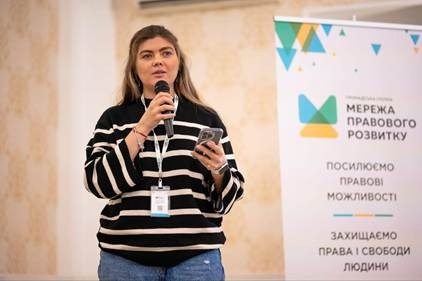
“After an assessment, international partners usually offer small organizations one-size-fits-all solutions: a strategy session or a standard training. But their needs can be completely different: one organization lacks a fundraising specialist, another needs a mentor, and yet another an internal facilitator,” explains LDN Organizational Development Director Iryna Chaika.
The Network focuses on mentoring and on defining development priorities individually for each organization. Otherwise, Iryna says, the strategy stays on paper and the organization runs on inertia. What is more, capacity is not only about documents but also about the team’s resilience: its ability to recover from crises and stay motivated. That is why the Network stresses the need for internal psychological support programs, which the sector still lacks.
Long-term cooperation with international partners usually begins with an assessment. Organizations with well-established processes already have ready answers to the questionnaires that different donors tend to repeat. For a small local initiative, however, an assessment becomes an extra burden: there are not enough people, time, or expertise. This creates a paradox: by honestly showing its actual state, an organization risks not receiving funding. As a result, it is the hromadas the NGO works with that lose out on resources.
Iryna Chaika also notes that formal procedures do not always reflect an organization’s actual work. A small organization may have extensive experience working with people, understand the needs of its hromada well, and solve its problems effectively, yet not meet every documentation requirement.
“It is important that assessments take into account not only formal capacity, but also the real experience, results, and potential of local organizations,” emphasizes Iryna Chaika.
Hence the temptation to tailor answers to the partner’s expectations or to hand the questionnaire over to artificial intelligence.
“On paper, everything looks flawless, but once the project starts, the discrepancies become obvious. The purpose of due diligence is not to paint a perfect picture for the donor, but to reveal the true level of capacity,” stresses Iryna Chaika.

Anna Nishnianidze, Co-founder and CEO of Philanthropy in Ukraine, shares this approach: “It’s like taking your temperature: not a verdict, but a diagnostic tool.”
In her view, the main mistake is to treat an assessment as an exam and put it off because of “not being ready.”
“Organizations often attach so much importance to this process that they keep postponing the assessment because they believe they are not ready for it. But there is no such thing as being ready or not ready. You come to see your strengths and weaknesses, identify areas for development, and finally start working on them with a clear starting point,” notes Anna Nishnianidze.
The findings should be turned into a working plan, with priorities, responsible people, and deadlines, rather than filed away in a folder. Anna names a clear understanding of the organization’s place in the ecosystem and its purpose, along with transparency as part of organizational culture, as the foundation of capacity.
At LDN, due diligence is treated as a team retrospective: an opportunity to record gaps, celebrate achievements, and decide what is critical now and what can wait. The Network recommends using the assessment results to plan staff development and improve operational processes. An honest description of how policies actually work reveals not only gaps but also strengths. In this way, due diligence stops being a formality for getting a grant and becomes a tool for internal development.
Does formalization affect the assessment outcome? “Definitely,” answers Anna Nishnianidze: procedures make assessments easier and are a sign of maturity, although their absence does not guarantee a low score.
Iryna Chaika adds that having a document does not in itself prove the rules are followed: formalization must be backed by practice.
A telling example is a gender equality policy. Gender equality and social inclusion expert and gender mainstreaming specialist Daria Hapirova explains that, because of the war, migration, and changes in the labor market, it is no longer possible to guarantee the safety of beneficiaries and proper working conditions for the team “manually”: procedures and designated responsible people are needed. Working conditions within the sector itself have changed, too. Power outages, attacks, a growing childcare burden, partners serving in the military — all of this falls unevenly on women.
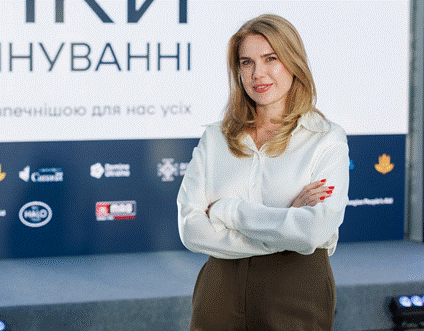
“We are now at a stage of the full-scale invasion when the civil society sector must take care not only of its beneficiaries but also of its own team, because working conditions are critically difficult. With this in mind, a gender equality policy becomes a tool that helps us respond more effectively to beneficiaries’ needs, provide them with targeted assistance, and protect people’s interests more fully and better,” emphasizes Daria Hapirova.
When there is no one to “borrow from” on how to develop a gender equality policy, Daria Hapirova advises starting with two steps: an anonymous staff survey (do people know how to file a complaint, and do they trust that mechanism?) and a review of existing procedures for gender sensitivity. The most common pitfall is wanting to have a perfect document right away.
“A gender equality policy is never a single document; it is an entire ecosystem,” stresses the expert.
The bare minimum is the policy itself, an implementation plan, and a designated responsible person; beyond that come the involvement of different departments and regular reviews. If the policy states an intention to recruit more women, there must be a separate document under which the HR department does this step by step. Otherwise, a year later the organization will find itself back where it started, because no one was responsible.
Daria Hapirova defines a gender equality policy as a document in which an organization sets out its commitments to equal opportunities, non-discrimination, and an inclusive environment, and describes how it will ensure them in practice. Inclusion here means exactly that — including everyone: equal participation for a young mother, a single father, and a person with a disability alike.
Organizations seeking to strengthen their capacity often face a key question: where to begin? For such cases, we have distilled the advice of experts Iryna Chaika, Anna Nishnianidze, and Daria Hapirova into 5 steps, with tips on where to find support.
A policy that is actually followed turns personal arrangements into rules that work regardless of specific individuals. It protects beneficiaries and the team, makes the organization a predictable partner, and makes due diligence easier.
Large foundations form consortia and come into hromadas with projects, and once they leave, what remains is a small local organization with contacts but no resources.
“In the context of hromada self-reliance and the Nexus approach, which combines humanitarian response, long-term development, and social cohesion, building local capacity is of fundamental importance,” says Iryna Chaika.
For LDN, this is a matter not only for individual organizations but also for hromadas. For example, while working in Mykolaiv Oblast, the Network found that there are only about ten established local CSOs working in hromadas on an ongoing basis, and that more than half of the hromadas receive support from international organizations without any subsequent involvement of a local actor. Yet it is precisely strong local organizations that can serve as a bridge between authorities and people, and, by joining forces in coalitions, advocate for hromadas’ interests at the oblast and national levels. That is why the Network continues to invest in their institutional maturity — so that every policy works not for a questionnaire, but for the hromada.
P. S. In June 2024, the Legal Development Network (LDN) launched a crowdfunding campaign, Recovery of The South of Ukraine , as part of the crisis response program #StandWithUkraine.
You can Recovery of The South of Ukraine |
If you have notices an error on the web-site, please, highlight the text and press ctrl-enter.
Print and place the Network's poster on a notice board in your entrance hall
Become a volunteer and assist others in finding problem solutions
0 800 331 113
from 10:00 to 17:00, toll-free within UkraineAsk a question, and one of the Network's experts will provide an answer.
Chat hours: daily from 10:00 to 16:00.
Ask questions via LawLink Bot in any convenient way. LawLink Bot is a smart and digital legal assistant created by the Legal Development Network.

The Legal Development Network implements comprehensive projects aimed at strengthening human rights, developing capable communities, and building sustainable tools for access to legal aid. We work at the intersection of advocacy, legal education, and local coordination of humanitarian response.

Support free legal aid in Ukraine. Your donation helps people affected by the war defend their rights in court and beyond.