Share on social media
Share
Tweet
Publication date: April 21, 2026
Author: Yuliia Bilyk, communication manager of the Legal Development Network
Today, as the civil society sector struggles with a lack of resources to implement its initiatives, it is more important than ever for organizations to diversify their sources of funding. The Legal Development Network (hereinafter “the Network” or “LDN”) views the provision of expert services as one of the most promising sources of funding for its member organizations. Therefore, with support from the Mott Foundation, the LDN offered Network professionals in various fields the opportunity to deepen their skills during a training-of-trainers program. As a result, twelve experts mastered tools that helped them structure their years of experience and develop high-quality training and capacity-building products.
Training and educational programs for communities, government agencies, and organizations are an area where external specialists are typically invited. If a trainer lacks experience in the public sector and does not understand its specifics, there is sometimes a risk of simply wasting time.
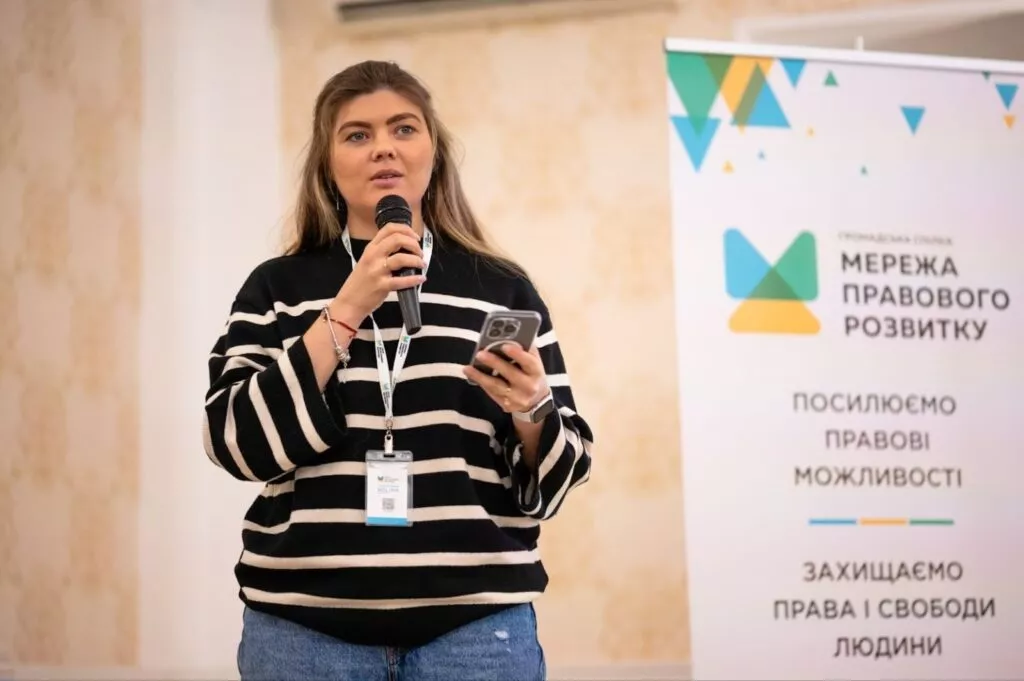
“If a topic has specific manifestations within the public sector, and the trainer fails to take this into account, it can happen that the training takes place but yields no results. It also happens that representatives of civil society organizations do not draw on experience from business or other sectors, thereby limiting the tools and knowledge they convey to program participants,” the LDN’s Director of Organizational Development Iryna Chaika says.
At the same time, experts from the Network’s member organizations have been working directly with communities for decades and understand their real needs and challenges. This is precisely what makes their training products particularly valuable, as they are based not on abstract theory but on practical experience.
“We set out to train our member organizations in coaching skills and, importantly, in how to ‘package’ practical insights into concrete products that will be interesting and in demand,” Iryna Chaika says.
Iryna Glushchenkova — a facilitator with many years of experience working with organizations across various sectors — was invited to lead the training of trainers. She developed a phased program tailored to each participant.
Prior to the several-day meeting in Kyiv, Iryna conducted preliminary diagnostic interviews with the program participants, got to know them, their topics, and the context of their work. At the same time, she suggested that each participant review their own expert portfolio — specifically, analyze their presence on social media.
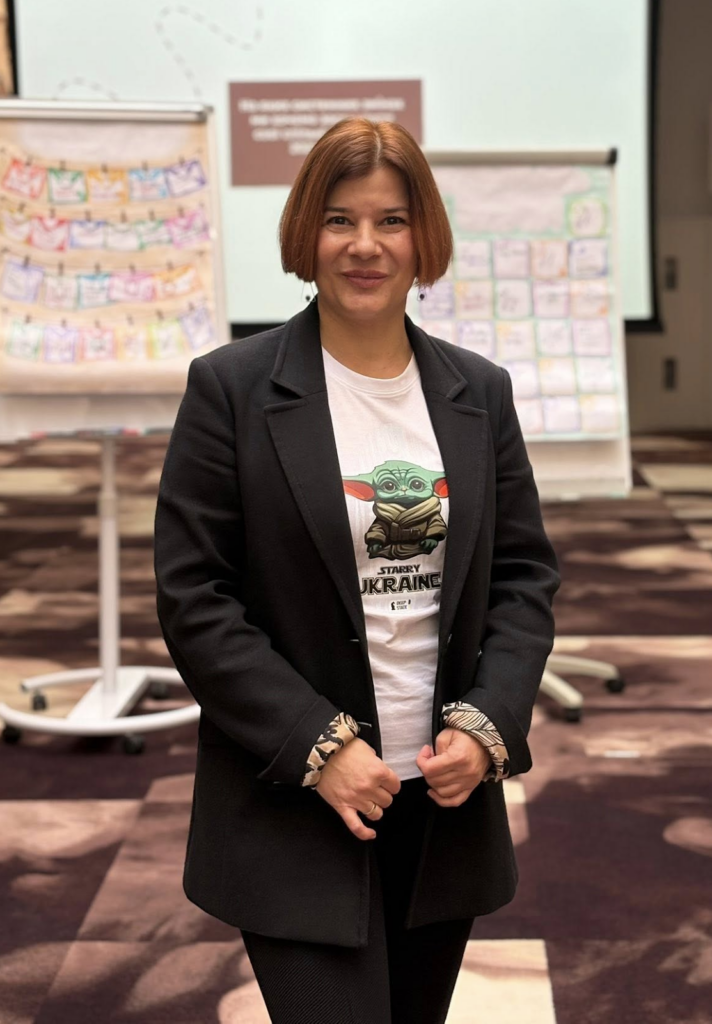
“I visited the participants’ pages and then compared what I saw with what I heard during the interviews. The visibility of their expertise was inconsistent — very capable, very experienced people simply weren’t showcasing themselves to the world,” Iryna Glushchenkova shares her first impressions.
After the preparatory phase, a three-day program took place in Kyiv. Each participant emerged with a “storyboard” — a detailed outline of their educational product. Next came individual mentoring sessions on Zoom: refining materials, fleshing out plans, and preparing to pilot the products.
“Through questions, I facilitated interaction and helped participants demonstrate the expertise that needs to be properly articulated. Sometimes I suggested formats, sometimes I highlighted key points: where to research the audience or choose a different activity,” Iryna Hluschenkova explains.
Vitalii Dorokh, Head of the “Pravo” member organization in the city of Khmilnyk, Vinnytsia Oblast, developed a training program for local government officials on effective engagement with the public. It is based on the results of a civil society organization’s study — an analysis of the city council’s activities across four levels of community engagement.
The expert-led training is based on practical exercises. For example, participants — local government employees — try to find public information about their community on their own, thereby identifying their own shortcomings. After all, experience shows that compliance with legal requirements does not guarantee that the published information is accessible to citizens.
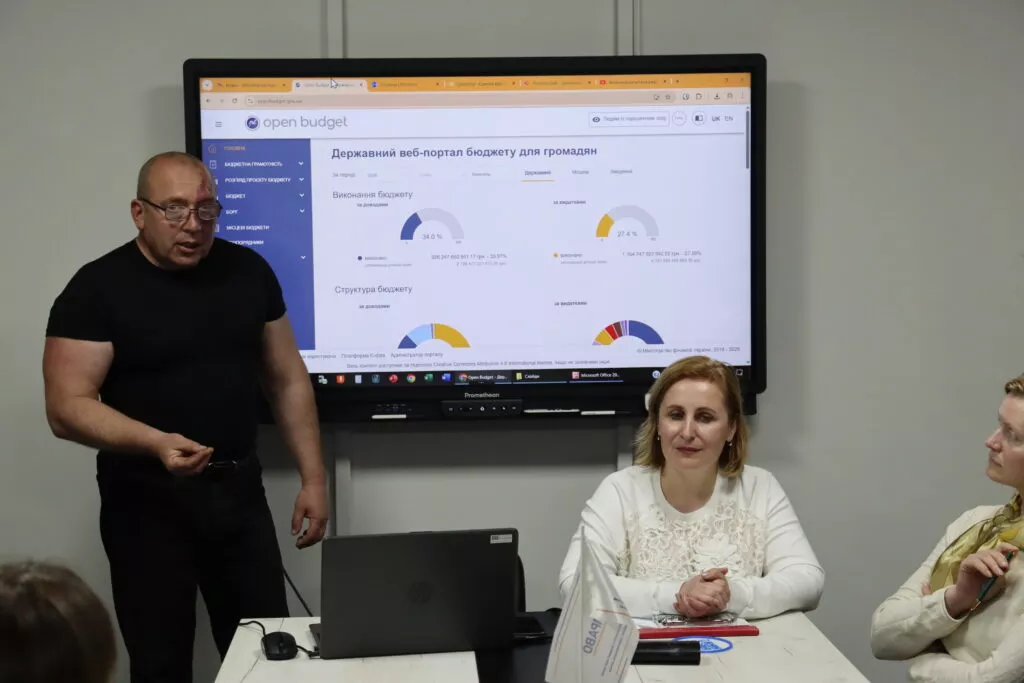
“It’s not enough to simply provide information — you need to be heard. It’s not just about publishing a document; you need to ensure that people actually read it,” Vitalii Dorokh explains.
The training program has already been piloted at the Khmilnytskyi City Council and can be adapted for any local government body. It will be useful for officials responsible for community outreach, heads of departments, as well as facilitators and consultants in the field of public administration.
Oksana Yatsyuk, Deputy Director of the Podil Human Rights Center — author of the book “Your Internet: Secrets of Online Safety” and a long-time expert in digital and information security — has developed a training program featuring a master class. The program is tailored for a broad audience, particularly for library spaces where people of various ages and skill levels may gather.
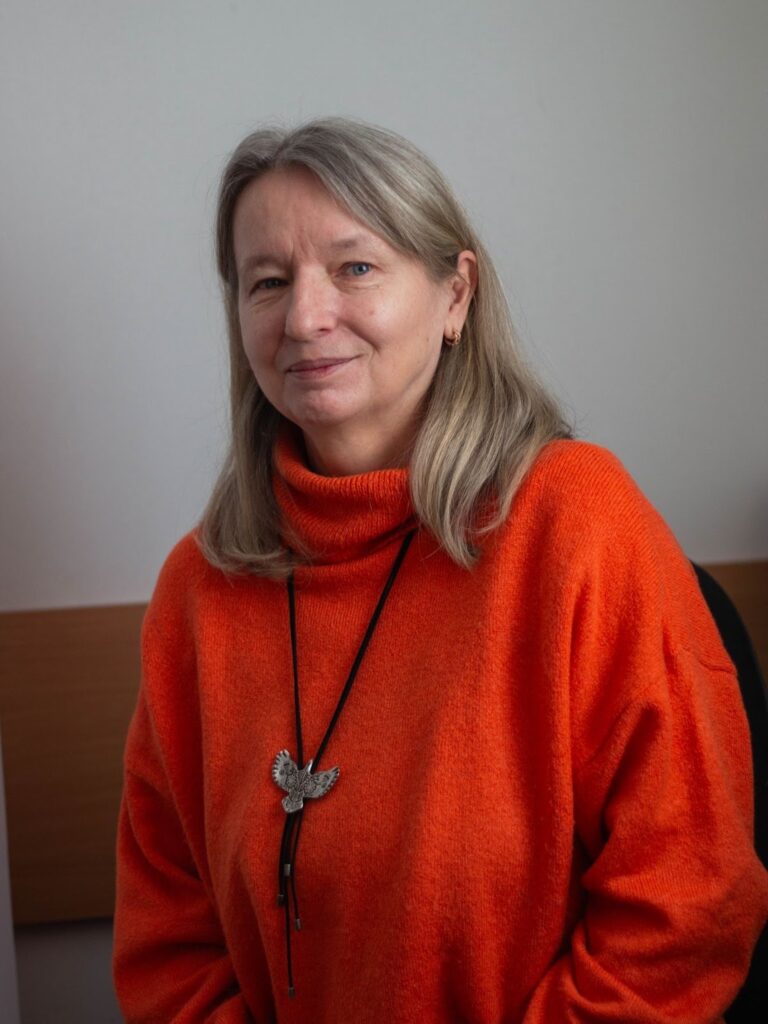
“Working with the trainer on my product was very helpful. We explored various ideas together, discussed them, and now I have a training program and exercises I’ve developed,” says Oksana Yatsyuk.
This product will be useful for libraries, community centers, schools, and any organizations seeking to improve their audiences’ digital literacy in an accessible and interactive format.
Olga Saukh, the Financial Advisor with the Legal Development Network, not only developed a course on financial management but also immediately implemented the trainer’s practical recommendations in her teaching practice.

“This course gave me the opportunity to organize my information and confirm that I’m not just a self-proclaimed coach. Ms. Iryna helped me organize everything and take a step back to look at everything I’ve already created and implemented. Thanks to following her recommendations, this course with my students has now become the best of all my trainings,” shares Olga Saukh.
The expert’s course is aimed at organizations and teams that want to build transparent and effective financial management processes. It is particularly relevant for non-governmental organizations seeking to strengthen internal financial procedures or prepare their staff to work with international partners.
Iryna Biryuk, a lawyer with the member organization Chernihiv Public Committee for the Protection of Human Rights, has been combining legal practice with advocacy work since 2020. During the training-of-trainers program, she managed to develop not one, but two products.
The first is a facilitation session for communities on establishing a mechanism for cooperation among stakeholders in the field of combating gender-based violence (GBV). The format does not involve traditional “lecture-style” training — instead, Iryna helps the community team independently identify gaps in their work and find solutions.
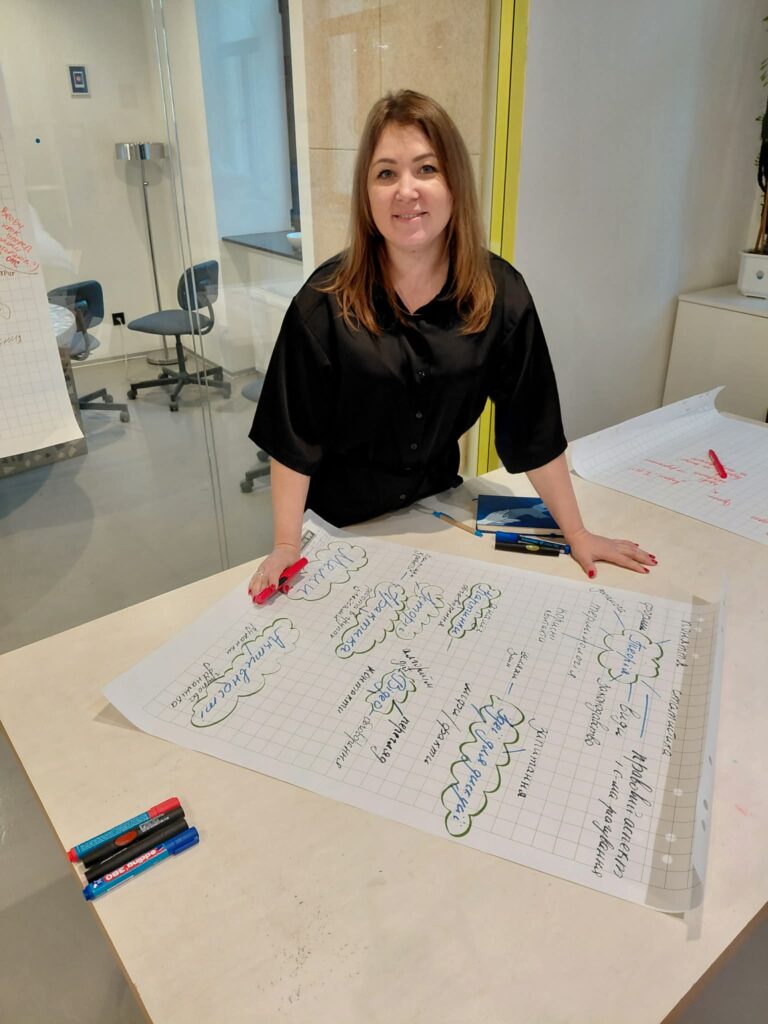
“I won’t be teaching you; instead, I’ll help you — your community — improve the effectiveness of your work, identify gaps, and figure out how to address them,” explains Iryna Biryuk.
The second product is an informational and educational program for teenagers on the topic of gender-based violence, which Iryna has already put into practice during her training. Both products are particularly relevant for communities, social services, schools, and organizations working with vulnerable populations.
The training of trainers is not a one-time event but part of the Network’s strategy: to help member organizations become more resilient and financially self-sufficient. To ensure that the training programs created by the participants become visible to potential clients, the MPR is launching a marketing campaign.
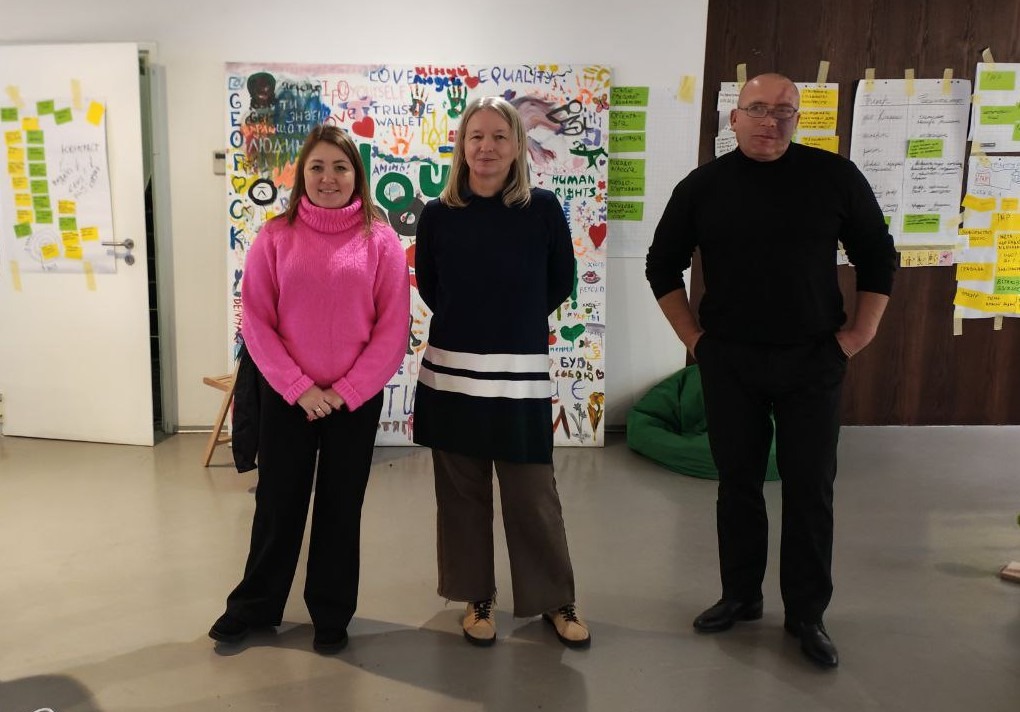
“The training materials are excellent; it’s important to let the world know about them. I feel that the training-of-trainers program will serve as an additional incentive for participants to take their work out into the community, pilot their training programs, and receive invitations from other communities and organizations. After all, their expertise is truly unique and valuable,” emphasizes trainer Iryna Hluschenkova.
If your organization or community is looking for training programs based on real-world experience in Ukrainian communities, the products developed by experts from the Legal Development Network could be the right solution. To get in touch and discuss details, simply email us at: office@ldn.org.ua
P. S. In June 2024, the Legal Development Network (LDN) launched a crowdfunding campaign, Recovery of The South of Ukraine , as part of the crisis response program #StandWithUkraine.
You can Recovery of The South of Ukraine |
If you have notices an error on the web-site, please, highlight the text and press ctrl-enter.
Print and place the Network's poster on a notice board in your entrance hall
Become a volunteer and assist others in finding problem solutions
0 800 331 113
from 10:00 to 17:00, toll-free within UkraineAsk a question, and one of the Network's experts will provide an answer.
Chat hours: daily from 10:00 to 16:00.
Ask questions via LawLink Bot in any convenient way. LawLink Bot is a smart and digital legal assistant created by the Legal Development Network.

The Legal Development Network implements comprehensive projects aimed at strengthening human rights, developing capable communities, and building sustainable tools for access to legal aid. We work at the intersection of advocacy, legal education, and local coordination of humanitarian response.

Support free legal aid in Ukraine. Your donation helps people affected by the war defend their rights in court and beyond.