Share on social media
Share
Tweet
Publication date: December 20, 2025
Author: Olenka Geletuk, communications expert, founder and editor-in-chief of “GLUZD”
The reintegration of veterans into communities, the development of veteran policy at the local level, and support for veteran entrepreneurship require systemic solutions, partnerships, and continuous advocacy. The Legal Development Network shared the results of two years of work, the tools developed for communities, and the practical challenges of implementing veteran policy during an event organized by the humanitarian organization “People in Need,” with funding from the Czech Development Agency.
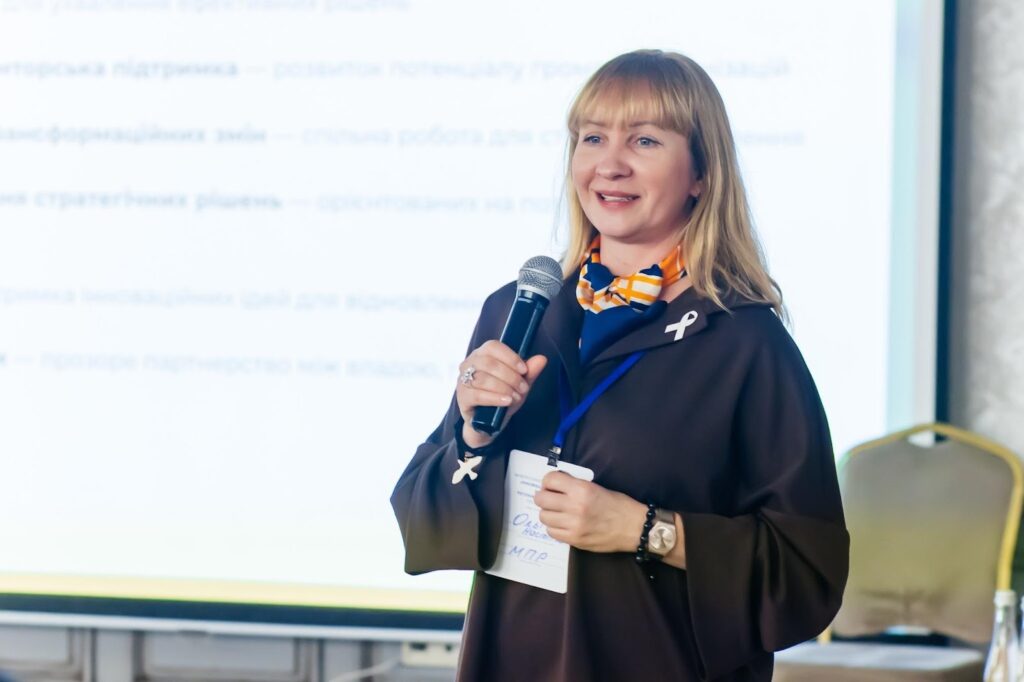
“Every advocacy step we take — even those that might not seem to directly support veterans — is a major leap forward for veteran policy as a whole. This policy must focus on ensuring that communities are ready to welcome veterans back, rather than forcing veterans to readapt to the communities they left to defend Ukraine,” emphasized Olga Nastina, Executive Director of the Legal Development Network.
Over the two years of the Vidnova project’s implementation, a comprehensive approach was applied, combining research, advocacy, and the development of practical tools to strengthen the capacity of communities to formulate and implement strategic solutions.

“Advocacy is not an isolated activity but a process that requires constant adaptation to the context. We have always strived to promote the institution of veteran support, and this theme has been a cross-cutting thread through all our activities over the past two years. Therefore, the results of our advocacy should also be evaluated as a whole,” says Daria Kovalchuk, Advocacy Coordinator of the Vidnova Project and Director of Legal Services Development at the Legal Development Network.
A practical result of the project’s first year was the development of a checklist for creating veteran spaces. A fundamental conclusion of our work on this topic was that the readiness of the community for their return must be the key principle when working with veterans.
The practical experience of implementing veteran policy was presented through the example of the Tlumach community. The community has developed and approved a veteran policy strategy through 2027, which defines key areas of support for veterans and their family members.
Based on the strategy, four targeted programs were adopted, covering support for families of the fallen, development of veteran sports, social support for veterans, and burial matters. This approach has allowed for the institutionalization of veteran policy at the level of local programs.
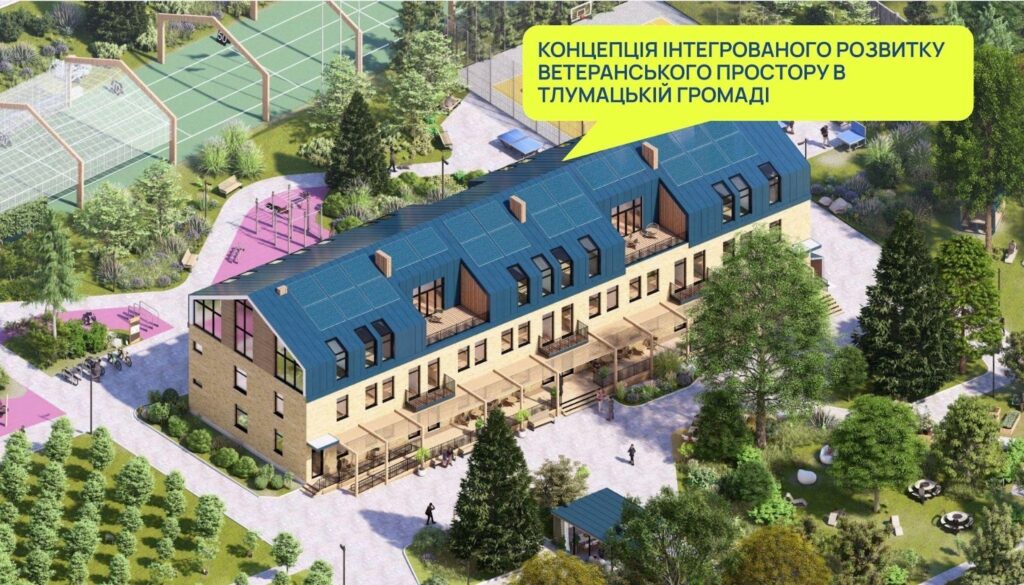
Additionally, the concept of a veteran space, developed by the community in 2025 with the support of Legal Development Network experts and financial assistance from the Czech Development Agency, was presented. Today, the community utilizes this concept during negotiations with international partners.
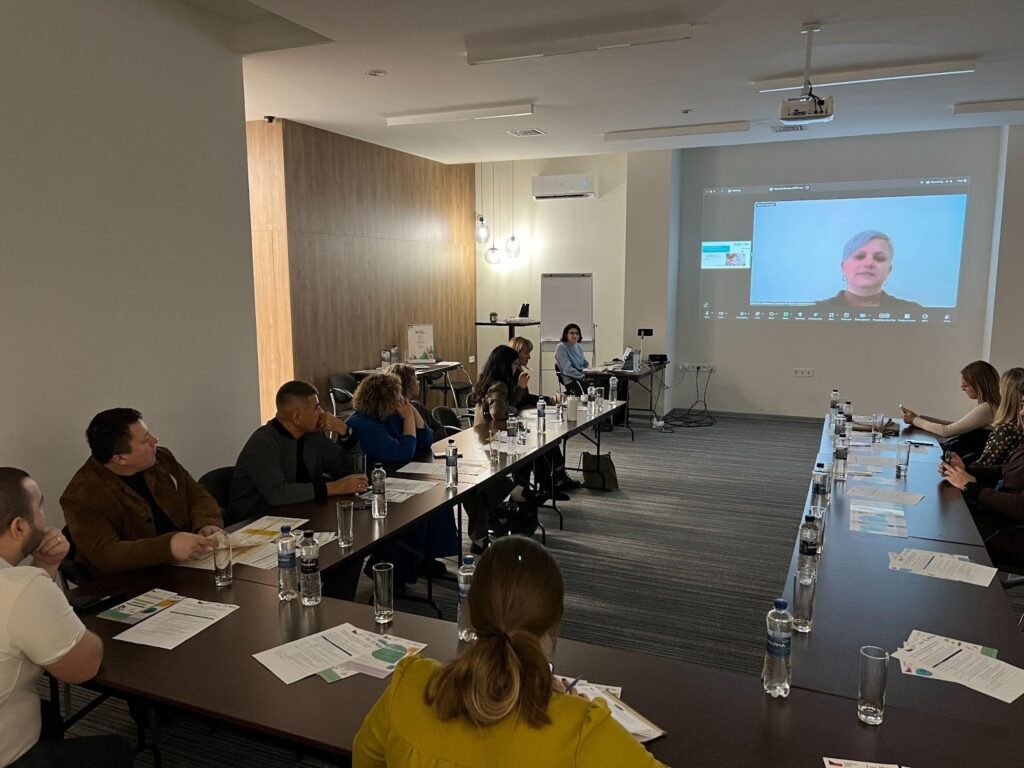
“A veteran space is not only about services; it is about an environment where a veteran feels accepted,” emphasizes Lesia Hrabovetska, Head of the Veteran Affairs Department of the Tlumach Community.
The proposed model includes provisions for temporary housing, the delivery of comprehensive services, and integration with medical and rehabilitation support.
“I am not sure if there is another veteran space in Ukraine that would include rooms for veterans in difficult life circumstances with temporary housing options, remote workstations for veterans and specialists, as well as on-site representatives from the Administrative Service Center (TSNAP), the Pension Fund, the Employment Center, and support specialists,” says Lesia Hrabovetska, describing the future space.
Among the priorities for future work, community representatives identified ensuring accessibility, developing veteran sports (specifically adaptive disciplines), and providing psychological support for veterans and their families.
The Vidnova project provided the community with more than just documents; it offered a systemic vision, needs assessment skills, and tools for advocating for veterans’ interests. This enabled a transition from reactive problem-solving to long-term strategic planning.
Thus, Vidnova’s success in the Tlumach community is not merely a local achievement but a proof of concept: investments in local policy and infrastructure create fertile ground where targeted service initiatives, such as entrepreneurship support, can take root and scale.
Veteran Case Managers: Achievements and Challenges
The implementation of the advocacy component has identified a series of systemic issues and gaps in state veteran policy “on the ground.” Analyzing these challenges is critical for the future development of effective support mechanisms and avoiding the recurrence of errors. Addressing these issues requires coordinated efforts at both the local and national levels.
The institution of veteran support specialists is a cornerstone of the reintegration system. Advocacy efforts have not only supported their work but have also highlighted both positive shifts and unresolved problems.
Thanks to active advocacy and dialogue with the Ministry of Veterans Affairs, the issue of specialist compensation has been resolved. Furthermore, educational requirements have been expanded (allowing for a Bachelor’s degree in any field), significantly simplifying the recruitment process within communities.
Ось варіант перекладу, який відповідає стилістиці офіційних звітів та аналітичних матеріалів:
Iryna Polozhezhna, a representative of the Ministry of Veterans Affairs, provided an update on the regulatory framework, specifically Cabinet of Ministers of Ukraine Resolutions No. 881, No. 879, and No. 868, as well as the professional standard that requires a higher education degree of at least a Bachelor’s level.
As of the time of the event, most communities have already established the relevant positions. Specialists have processed over 111,000 inquiries and provided more than 519,000 support measures. At the same time, discussion participants highlighted several problematic issues.
Among the unresolved matters is the lack of clear interaction protocols between support specialists and medical facilities (regarding medical confidentiality) and penitentiary institutions. This creates legal uncertainty and limits the ability to provide assistance.
Furthermore, there is a risk of assigning duties to specialists that fall outside their scope of competence, particularly the provision of qualified legal aid. This function should be fulfilled by the Free Legal Aid (FLA) system in close cooperation with the support specialists.
“There is a clear demand for precise operational algorithms for working with veterans, especially in complex cases where solutions are currently lacking—specifically regarding veterans in correctional facilities and their access to digital services,” participants emphasized during the discussion.
Iryna Polozhezhna noted that requests for such support have come from several regions, including Kirovohrad, Lviv, and Khmelnytskyi oblasts, indicating that the problem is systemic. Individuals in this category do not lose their veteran status; however, a specific operational algorithm must be developed for support specialists to assist them. Such an algorithm should account for security, legal, and ethical aspects of interaction, while clearly delineating the powers of the specialist and the Free Legal Aid attorney.
The identified challenges clearly point to the need to transition from isolated pilot projects to the development of systemic, nationally coordinated solutions that will ensure the sustainability and effectiveness of veteran policy in Ukraine.
Developing Veteran Entrepreneurship: The “Courage for Business” Experience
The “Courage for Business” project, implemented by the Czech humanitarian organization People in Need in partnership with the Lviv City Council, focused on developing veteran entrepreneurship through a comprehensive support model. This model integrated training, mentorship, grant assistance, psychosocial support, and business promotion.
The grant component was based on a co-financing model: up to UAH 200,000 provided by the donor and UAH 100,000 from the city budget. The educational program featured a ten-day intensive course where participants covered finance, marketing, business pitching, soft skills development, leadership, and mental health. Special attention was paid to creating promotional content and ensuring business accessibility.
Throughout the project, 226 individuals completed the training, receiving individual consultations and attending workshops. The initiative supported 100 veteran-owned businesses, 48 of which were startups. As a result, 154 jobs were created.
Participants included veterans, family members of service personnel, and internally displaced persons (IDPs). The total project budget amounted to approximately UAH 24 million in donor funding and over UAH 10 million from the city budget. Notably, the donor also covered the grant taxes for the recipients.
Participating veterans noted that this support allowed them not only to grow their businesses but also to strengthen the social dimension of their enterprises.
The project continues to implement additional support tools, including regular veteran business fairs, a map of veteran-owned enterprises, a dedicated veteran product shop at the Business Support Center, and promotion through city information channels. Entrepreneurs are also integrated into business clusters and international exhibitions, increasing the visibility of veteran-led businesses.
According to the participants, the established communities of veteran entrepreneurs serve as a platform for mutual support and knowledge sharing, significantly facilitating veterans’ reintegration into civilian life.
What’s Next?
The lessons learned from the “Vidnova” and “Courage for Business” projects convincingly demonstrate the high efficiency of comprehensive and partnership-based models for veteran support. The synergy between building institutional capacity at the community level and providing targeted services creates a sustainable and long-term impact. Key success factors included the partnership between the civil society sector and local self-government, flexibility in responding to the needs of beneficiaries, and a holistic approach combining financial and non-financial support tools.
Key lessons to serve as a foundation for future initiatives:
This material was prepared by the Legal Development Network in cooperation with the humanitarian organization People in Need and with the financial support of the Czech Development Agency.
The findings, interpretations of collected information, and conclusions expressed in this material are solely those of the authors and do not necessarily reflect the views of the project’s donors or partners.
|
Отримайте поглиблену консультацію через чатбот LawLink
|
P. S. In June 2024, the Legal Development Network (LDN) launched a crowdfunding campaign, Recovery of The South of Ukraine , as part of the crisis response program #StandWithUkraine.
You can Recovery of The South of Ukraine |
If you have notices an error on the web-site, please, highlight the text and press ctrl-enter.
Print and place the Network's poster on a notice board in your entrance hall
Become a volunteer and assist others in finding problem solutions
Ask question and one of the LDN's lawyers
will answer it.
Chat's schedule: from 10 to 16
every day
Ask questions via LawLink Bot in any convenient way. LawLink Bot is a smart and digital legal assistant created by the Legal Development Network.

The Legal Development Network implements comprehensive projects aimed at strengthening human rights, developing capable communities, and building sustainable tools for access to legal aid. We work at the intersection of advocacy, legal education, and local coordination of humanitarian response.