Share on social media
Share
Tweet
Publication date: June 5, 2026
Interview by Yuliia Bilyk, the Legal Development Network Communications Manager
In late May 2026, three communities in Lviv Oblast — Velykomostivska, Dobrotvirska, and Rava-Ruska — signed a Cooperation Agreement. This document was the culmination of nearly a year of field research, focus groups, council sessions, and telephone conversations. With the support of the international charitable platform GlobalGiving, the process was facilitated by Nataliia Kostyshyn — chair of the board of the NGO Youth Initiative Center and an expert with the Legal Development Network. In this interview, she discusses how the three Galician communities learned to listen to one another and how this might shape their future.
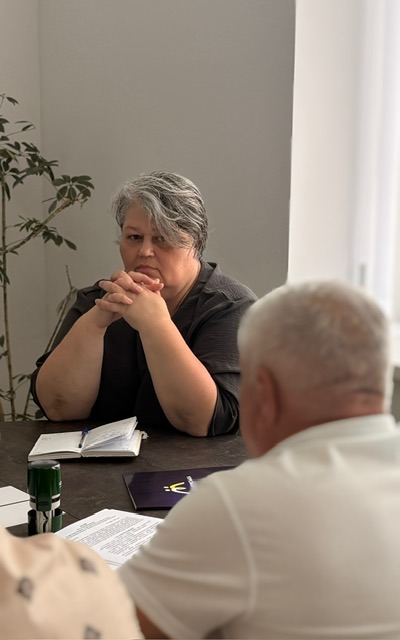
Why did the Velykomostivska, Dobrotvir, and Rava-Ruska communities end up sitting at the same table?
Nataliia Kostyshyn: The Velykomostivska community took the initiative. Geographically speaking, Dobrotvir lies on one side of it, and Rava-Ruska on the other. That is the first, logistical, reason. But there are others as well.
These communities know their own capabilities and needs; they are ready to share and learn from one another. For all of them, proximity to the border with Poland/the European Union represents an opportunity for multilateral partnerships, cross-border cooperation, and shared experience.
The region’s recreational areas hold promise for future tourist routes and the infrastructure surrounding them, which in turn will drive the development and sustainability of these communities.
But perhaps the most important thing is the people. They are of different ages, have different experiences and approaches to work, but are united in their vision for improving their communities. Previous collaboration has demonstrated the need to combine efforts and capabilities, and to develop shared ideas and projects.
What was your task as a facilitator?
N.K.: At first, the goal was to truly establish contact between the communities. Because it’s one thing to have agreements between three people — the community leaders. It’s quite another to explore the communities and the connections between them as systems.
My tasks were:
How long did the facilitation process last in total?
N.K.: Almost a year. The first meeting, where the request was voiced, took place on June 11, 2025. During this time, we conducted field research in each community, as well as focus groups and interviews. Then we shared the summarized materials with all three communities. They worked through the materials, identified common pain points and each community’s strengths, and analyzed what they could offer one another.
There was also a force majeure situation: just as we were about to finalize the document, changes were made to the legislation governing housing and utilities. We had to take a step back and re-examine the regulatory documents to ensure that the communities avoided any mistakes. But we managed to handle that together as well.
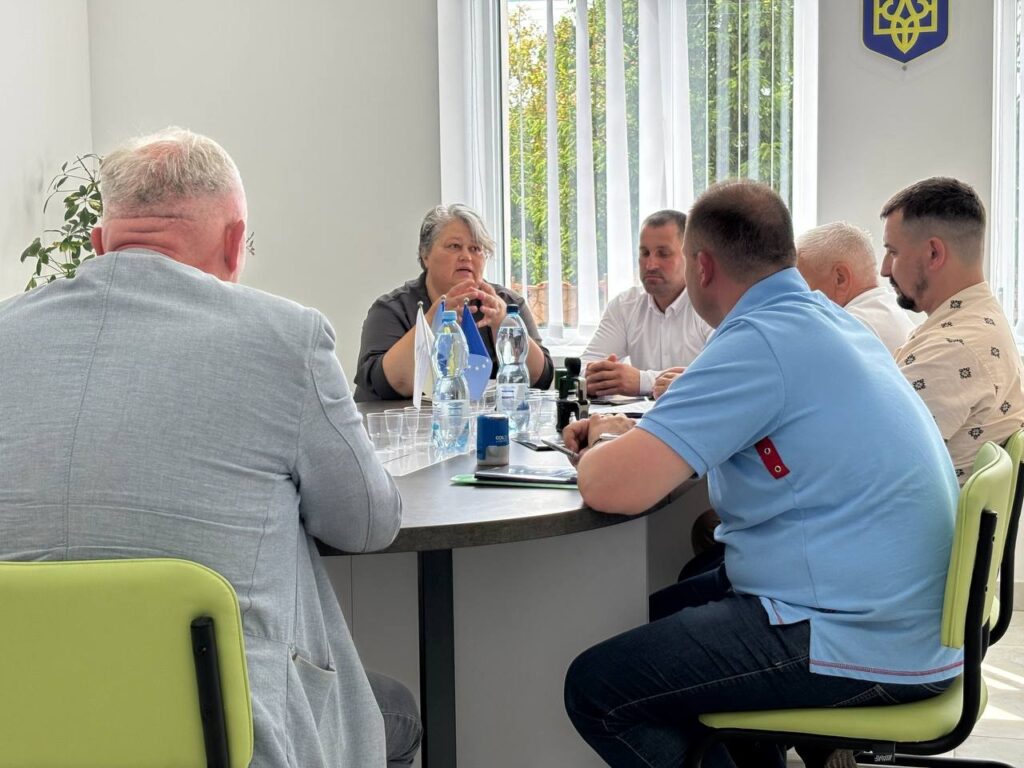
Who did you work with directly? What groups of citizens were involved in the discussion process?
N.K.: The first tier consists of community leaders. They were the ones who had to make the decisions; they took the brunt of it. The second level was the body of deputies. There is a procedure established by law: a proposal is presented at a session, then discussed in relevant parliamentary committees, followed by coordination councils, and finally brought to a session for a vote. Therefore, all preparatory work was conducted with the deputies, not just with the heads and secretaries of the councils.
The third level is sectoral experts. Once the areas of focus were determined, we understood exactly who to talk to. For example, you wouldn’t discuss education with experts in housing and utilities. The result was a mix where everyone clearly knew their community, their work, and their concerns.
Civil society organizations are a separate story. In small communities, they often exist in name only. Civil society organizations were actively involved in one of the three communities; in the others, it was difficult. But there are always proactive residents who care deeply and are ready to help with good causes.
Did the communities take the initiative, or did you have to push them?
N.K.: No, I didn’t have to push them. They were quite proactive. If some weren’t involved at a certain point, others would step in to back them up. There were constant phone discussions between official meetings, with lots of questions — from one community to another, and to themselves. It was definitely not a one-sided effort.
By the time we were finalizing the document and a legislative emergency arose — they were already closely tracking the changes on their own. The communities have developed an understanding that everything must be done on time, not yesterday or tomorrow.
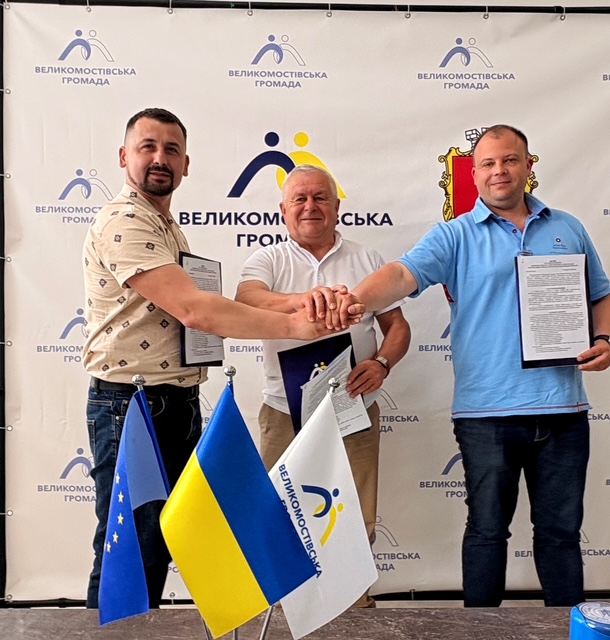
In the context of cooperation agreements, one often hears about the signing of memorandums. Why did these three communities sign an agreement specifically?
N.K.: A memorandum is, rather, a conditional, declarative document of intent, and, unfortunately, more often than not, that is where it ends. There is an important point here. If we are talking about community cooperation, let’s be honest with the communities and with ourselves. A conditional memorandum is a document signed by a single person. Yes, this person is an official to whom the community delegates certain powers. But where is the community at this point? Usually, they are simply informed that Community Leader A has signed a Memorandum with Community Leader B. And that’s it. The Velykomostivska, Dobrotvirska, and Rava-Ruska communities took a different path — somewhat more complex, but more effective. A cooperation agreement is the result of interaction, consultation, and agreements, first and foremost within the community itself. Only then does interaction and the development of concrete steps take place in collaboration with other communities.
The signed Cooperation Agreement is already the second document between the communities. The first was a memorandum of intent; by signing it, the heads took on a specific commitment: to coordinate the process and develop a clear plan — what to do, in which sectors, and where there might be overlap. The agreement was concluded in accordance with the provisions of the Law of Ukraine “On Cooperation of Territorial Communities.” It provides for various formats of agreements and cooperation. The communities opted for joint project activities.
Today, communities are submitting documents to register the agreement and have it entered into the Ministry of Community and Territorial Development’s Register of Cooperation Agreements between Local Communities.
The road to the Agreement was indeed a long one. Did communities begin taking action even while this process was underway?
N.K.: Yes, and that’s important. Alongside the preparation of documents, a real exchange began. For example, in Dobrotvor, the idea of establishing a “Plast” branch was taking shape — it’s a powerful tool for working with young people. In Rava-Ruska, such a Plast unit once operated, and as it happens, it now needs to be revived. Meanwhile, in Velyki Mosty, the Plast chapter is very strong. As a result, “Plast” has become one of the points where the communities’ interests intersect: Plast members from the Velyki Mosty community brought the Bethlehem Fire to the Dobrotvor village council. Work has now begun in Dobrotvor to establish a chapter. Slowly, step by step, but it has begun. And there are already several such examples. Communities have started to look more closely at one another, combining the experience already gained by partners with their own, and discussing the results and risks.
In your opinion, how have the communities changed over the past year — in their perceptions, approaches, and vision for their future?
N.K.: It’s still too early to talk about any significant changes. But there are three important shifts. The first is that communities have started talking not about problems as such, but about how to solve them. That’s a completely different way of thinking.
Second, many communities feel uncomfortable hearing negative things about themselves. But in the course of our work, we had to not only hear these things but also voice them ourselves and acknowledge that something was amiss. This, too, is a change—though not an instant one, it is strategically important.
And third, communities began paying more attention to one another. While focus groups initially said, “We have this and that, and we’re great at it,” by the time the plan was finalized, they were saying, “This is in our documents and on our website, but it doesn’t work, and we didn’t even know that ourselves.” This is important. Because you have to first see the reality of the situation, and only then take action to bring about change.
For reference
As part of their collaboration, the Velykomostivska, Dobrotvirska, and Rava-Ruska communities in Lviv Oblast will work on implementing joint projects, exchange best practices, improve resource efficiency, seek new opportunities to attract investment and international support, and develop services that are important to community residents. The communities are grateful to GlobalGiving, the Legal Development Network, and Natalia Kostyshyn personally for their support and expert guidance.
This material was created by the Legal Development Network with the support of the international charitable platform GlobalGiving. The content of this publication is the sole responsibility of the Legal Development Network.
P. S. In June 2024, the Legal Development Network (LDN) launched a crowdfunding campaign, Recovery of The South of Ukraine , as part of the crisis response program #StandWithUkraine.
You can Recovery of The South of Ukraine |
If you have notices an error on the web-site, please, highlight the text and press ctrl-enter.
Print and place the Network's poster on a notice board in your entrance hall
Become a volunteer and assist others in finding problem solutions
0 800 331 113
from 10:00 to 17:00, toll-free within UkraineAsk a question, and one of the Network's experts will provide an answer.
Chat hours: daily from 10:00 to 16:00.
Ask questions via LawLink Bot in any convenient way. LawLink Bot is a smart and digital legal assistant created by the Legal Development Network.

The Legal Development Network implements comprehensive projects aimed at strengthening human rights, developing capable communities, and building sustainable tools for access to legal aid. We work at the intersection of advocacy, legal education, and local coordination of humanitarian response.

Support free legal aid in Ukraine. Your donation helps people affected by the war defend their rights in court and beyond.