Share on social media
Share
Tweet
Publication date: September 15, 2026
Author: Halyna Kolesnyk, Director of Strategic Communications, Legal Development Network
The Legal Development Network (the Network, LDN) has launched a humanitarian project in two villages of the Bilozerka community in Kherson Oblast. This is a logical continuation of four years of work with this community.
The project “Emergency Support for Water Supply and Hygiene for Frontline Communities in Kherson Oblast” runs from July to November 2026, with a budget of USD 99,999.61. LDN is implementing it in partnership with Acted within the ABA Consortium, supported by the Humanitarian Fund for Ukraine. The ABA Consortium is a partnership between Acted and Nonviolent Peaceforce, led by the Danish Refugee Council.
Assistance will reach more than 100 low-mobility residents: 65 in Myroliubivka and 45 in Pravdyne. Most are elderly people and persons with disabilities who cannot reach distribution points on their own. At least three have Group I, Subgroup A disability status and are fully dependent on outside help.
The project includes three activities:
Kits are distributed as a one-time allocation, each designed to last three months. In total, the team will conduct 81 door-to-door visits.
Why the Bilozerka Community
Centralized drinking water supply in the villages of Myroliubivka and Pravdyne is effectively absent, since the water delivered through the centralized network from a borehole does not meet drinking water standards. Network reconstruction is not complete, so residents depend on alternative sources. Water trucking remains the main means of supply, but it is irregular and does not cover everyone’s needs.
The community operates five stationary drinking water distribution points. For a person who is bedridden or can only move within their own yard, these points are unreachable. Physical distance becomes a barrier that excludes the most vulnerable residents from the assistance system, even though help is formally present in the community.
The situation is further complicated by proximity to the front line — ranging from 0 to 20 kilometers — which often hampers a rapid response to needs.
Continuing Systemic Support
The humanitarian distribution of water and hygiene supplies is not LDN’s first support to this community. Throughout 2024–2025, LDN helped the community develop an early recovery and development strategy and supported its implementation. Because the Bilozerka community is located in immediate proximity to the front line and constantly suffers from shelling, its strategy is focused on survival and has a shorter planning horizon of three years. The community identified its priorities as creating conditions for residents’ return, rebuilding destroyed housing and critical infrastructure, optimizing administrative and social services, and reviving agricultural business. As part of this work, a roadmap for developing administrative services was prepared for the community. The strategic process relied on the Ministry of Communities and Territories Development’s methodological guidelines and included a sociological survey involving residents and internally displaced persons.
The Bilozerka community independently manages its needs through LINK, which LDN has administered since 2023. LINK also functions as a platform that brings together humanitarian organizations and community representatives. Through it, the community records residents’ needs, verifies them, sees statistics and analytics, and communicates with partners. This changes the community’s position: it stops being a recipient of aid and becomes a participant in the process, shaping and tracking its own requests.
In addition, LINK’s humanitarian response lawyers make visits to settlements that can be reached safely. A total of 24 requests have been recorded, 20 of which were resolved through legal information and referrals. Four cases required referral — to court, the reception office of the Ukrainian Helsinki Human Rights Union in Kherson, and the charitable foundation “Ya-Kherson.” Among the applicants, 18 of 23 were women, and 52.2% were people aged 60 and older. The project “Emergency Support for Water Supply and Hygiene for Frontline Communities in Kherson Oblast” came about because part of the community’s needs cannot be closed even with a strategy and a working coordination mechanism in place. This need cannot be shifted onto the local budget and is difficult to hand off to an international partner. LDN took it on to relieve pressure on the community and free up its resources for work that no one else will do.
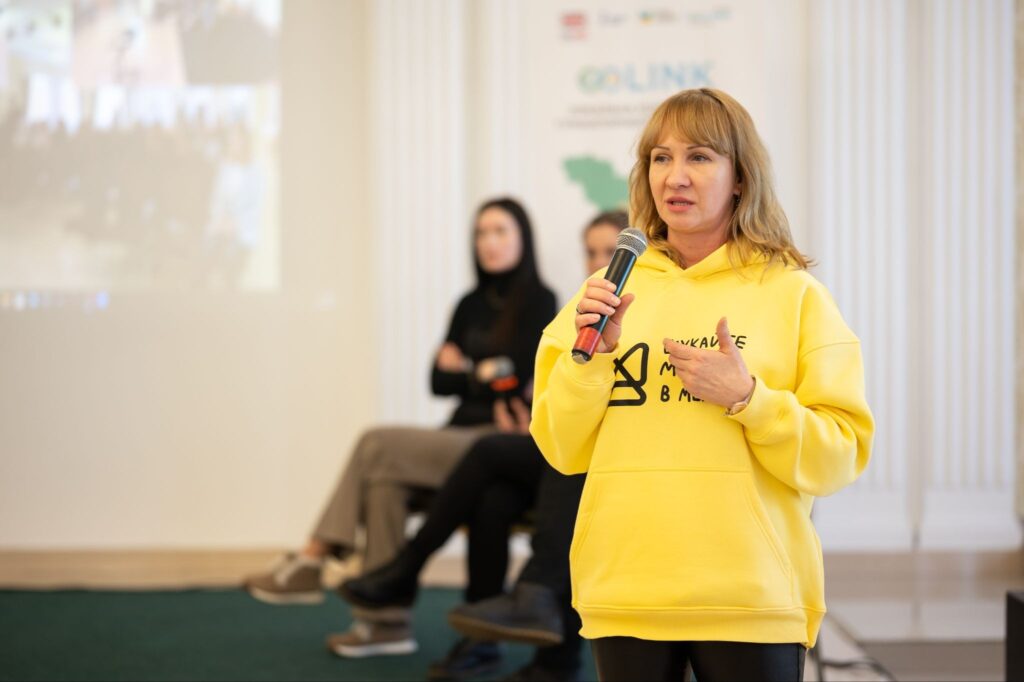
“First we helped the Bilozerka community define its direction of development through 2030, then we handed over a tool for managing needs through the LINK platform, and today we are supporting the residents who need help the most. And this isn’t only about water and hygiene kits. As an organization specializing in legal aid, we also help people access legal consultations on social payments, document restoration, and housing and inheritance matters. This is how we see comprehensive support: combining community development, humanitarian response, and the protection of people’s rights,” says Olha Nastina, Executive Director of the Legal Development Network.
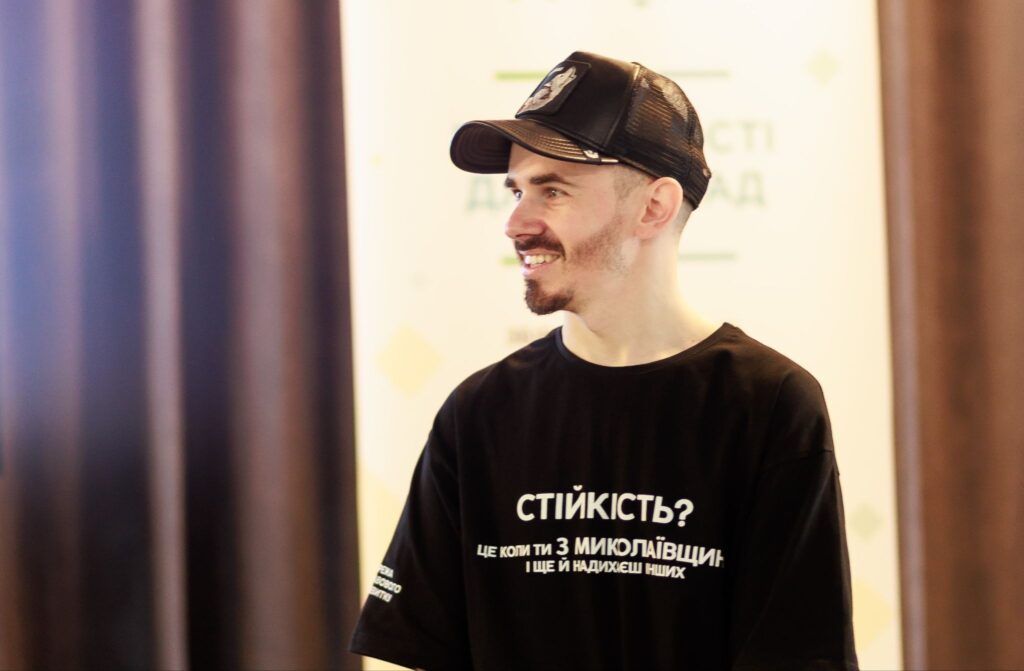
“This project didn’t come out of nowhere. It grew out of the trust we’ve built with the community over years through LINK. During the design phase, we relied on the platform’s data, and that saved us weeks. Cooperation with the ABA Consortium strengthened us — it helped us build out other safety protocols, risk analysis, and field team tracking,” says Viktor Alkhimov, Program Manager of the Legal Development Network and project lead.
WASH Cluster Coordination: The Level Where a Need Can Be Closed Systemically
Distributing water solves one person’s problem for one specific week. It doesn’t restore the water supply system or change the delivery schedule. For a need to be closed for good, the decision has to be made at a different level — where partners agree on who works where and by what standards.
The Legal Development Network is present at this level too. The organization coordinates the Water, Sanitation and Hygiene (WASH) Cluster in Mykolaiv Oblast. This means working with the full picture of the sector: which partners work where, which settlements remain uncovered, where assistance overlaps, and where a need has been recorded for months without being closed.
This position gives LDN a rare combination of two vantage points. On one hand, field-level household data collected through LINK and its own visits. On the other, access to the forum where this data is translated into sector-wide decisions: reallocating partners across territories, aligning kit standards and water-supply norms, and building the case for donors on priority gaps.
The project in the Bilozerka community uses both vantage points. Operationally, it closes an acute shortage for 110 people right now. At the same time, it generates an evidence base: how much water a low-mobility household actually needs, whether kits for bedridden people are effective, and how regular water trucking needs to be for a need to be considered closed. This data has value well beyond the two villages, since it describes a typical situation for dozens of frontline settlements in both oblasts.
That is why the project is implemented in coordination with the WASH Cluster, local authorities, and the HOCG Standing Working Group on Frontline Response. The humanitarian response here doesn’t remain an isolated episode — it becomes an argument in the broader conversation about how the sector should work with low-mobility populations as a whole.
Legal Aid as Part of Systemic Support
The Legal Development Network is a civil society union bringing together civil society organizations from different regions of Ukraine. Within the ABA framework, its core sector is the Water, Sanitation and Hygiene project. Along with water and hygiene kits, the team gives residents informational materials on how to access legal aid and support.
This matters specifically for this target group. People who don’t leave their homes most often face issues around registering disability status and social payments, confirming ownership of damaged housing, documenting destruction, inheritance cases, and restoring lost documents. They cannot reach a lawyer on their own any more than they can reach a water distribution point, so providing consultation phone numbers removes this barrier — at least at the level of awareness.
Along with the kits, people receive detailed instructions for use, information on countering gender-based violence, and information on obtaining legal aid from the Legal Development Network and its partners.
Safety, Accountability, and Capacity Strengthening
Working in an area 0–20 kilometers from the front line requires separate preparation. Distribution schedules remain flexible: days, times, and routes are regularly changed to avoid predictability. Aid is packed in advance to minimize the team’s time on site.
Under its Duty of Care program, Nonviolent Peaceforce provided the team, free of charge, with personal protective equipment, body armor, first-aid kits, and drone detectors, as well as life insurance for all staff. Separately, the organization has signed on to NP’s psychological support program: a project or field team member can access a psychologist free of charge for up to eight sessions per issue.
Consortium partners ran a series of trainings for the team. Nonviolent Peaceforce trained the team in protection mainstreaming, first psychological aid, and a three-day first-aid course. Acted trained the team in MEAL and safety protocols. For situational security analysis, the team uses additional resources, including the INSO platform, official requests to the Kherson Oblast military administration, and advance communication with partners.
A separate component of the partnership is an institutional capacity development plan agreed with Acted. It covers MEAL, project cycle management, supply chain, finance, human resources, governance, and security. Part of this support will remain with the organization after the project ends: partner arrangements on staff protection predate ABA and will continue afterward.
Assistance with water supply and hygiene kit distribution is provided under the project “Emergency Support for Water Supply and Hygiene Needs of Frontline Community Populations in Kherson Oblast,” implemented by the Legal Development Network in cooperation with Acted within the ABA Consortium, with support from the Humanitarian Fund for Ukraine. The ABA Consortium is a partnership of the international humanitarian organizations Acted and Nonviolent Peaceforce (NP), led by the Danish Refugee Council (DRC).
The conclusions, interpretations of information, and other content presented in this material reflect solely the views of the authors and do not represent the views of the project’s donors and partners.
P. S. In June 2024, the Legal Development Network (LDN) launched a crowdfunding campaign, Recovery of The South of Ukraine , as part of the crisis response program #StandWithUkraine.
You can Recovery of The South of Ukraine |
If you have notices an error on the web-site, please, highlight the text and press ctrl-enter.
Print and place the Network's poster on a notice board in your entrance hall
Become a volunteer and assist others in finding problem solutions
Ask question and one of the LDN's lawyers
will answer it.
Chat's schedule: from 10 to 16
every day
Ask questions via LawLink Bot in any convenient way. LawLink Bot is a smart and digital legal assistant created by the Legal Development Network.

The Legal Development Network implements comprehensive projects aimed at strengthening human rights, developing capable communities, and building sustainable tools for access to legal aid. We work at the intersection of advocacy, legal education, and local coordination of humanitarian response.

We make legal aid accessible. We empower communities and help them develop. Support us in this work.